
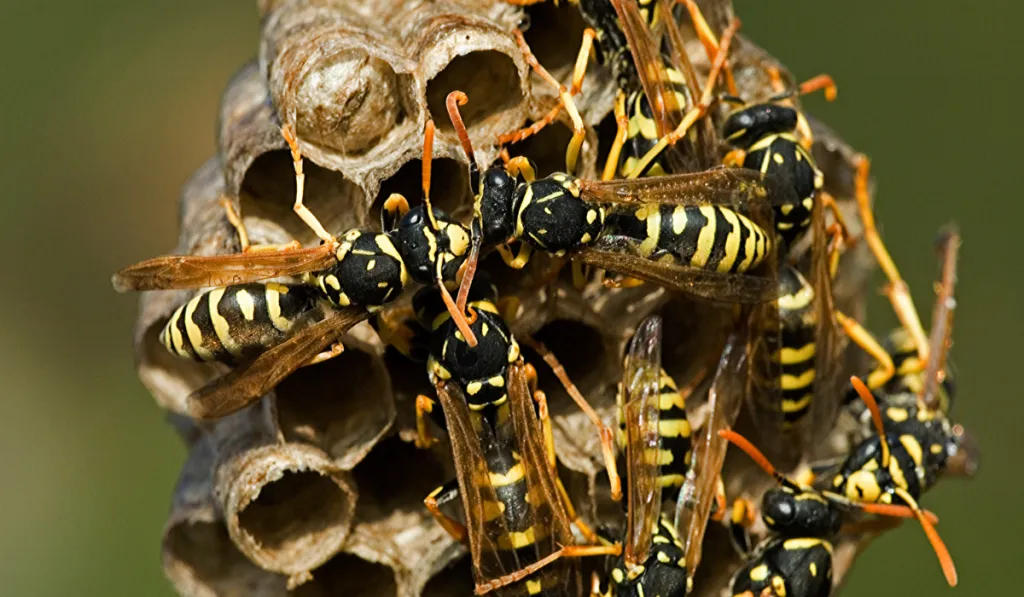
Every spring, Montana homeowners begin to notice the familiar flutter of long-legged wasps scouting around eaves and porch corners. These are paper wasps, one of the most common species of wasps in North America. While they help with pollination and even control caterpillars and other garden pests, their habit of building nests near doorways and decks turns them into unwanted guests.
Here are six prevention steps that help reduce paper wasp activity and discourage nesting this early spring.
Key Takeaways
- Paper wasps are common stinging insects across North America that prefer sheltered areas for building nests.
- Preventive maintenance, like sealing eaves, removing food sources, and using wasp traps, can help reduce activity.
- Natural scents like peppermint oil are sometimes used as wasp repellents, but effectiveness varies.
- Professional pest control from Kodiak ensures your home stays protected through each wasp season.
6 Prevention Moves to Deter Paper Wasps
Keeping paper wasps away from your home starts with prevention. Here are six proven moves that make your property less inviting to these stinging insects.
1. Seal up Nesting Gaps Early
Paper wasps look for sheltered areas like gaps in siding, eaves, and attic vents to build their umbrella-shaped nests.
Inspect your home each early spring and seal any cracks or crevices where a wasp colony might form a nest site. Caulk gaps around light fixtures and vents to keep these social wasps from claiming your structure.
2. Keep Outdoor Food Sources Contained
Paper wasps are drawn to food sources like sugary drinks, open garbage cans, and even spilled pet food. Clean up after outdoor meals and keep trash bins tightly sealed.
Reducing attractants cuts down on wasp activity around your property and discourages foraging workers from sticking around.
3. Knock Down Small Nests Early
During early spring, you might see small paper wasp nests begin to form under eaves or deck railings. Removing them early helps get rid of them before a full wasp colony develops. Some people try DIY options like wasp spray bottles or dish soap mixtures, but these can provoke stings and rarely solve the problem.
It’s safest to have a professional remove the nest and prevent wasps from returning.
4. Limit Clutter and Remove Sheltered Nesting Spots
Wasps prefer sheltered areas for building nests.
Reduce hiding spots by trimming tree branches that touch your roofline, stacking firewood away from walls, and clearing yard clutter.
Check under decks, furniture, and playsets for nest sites. Removing these options makes your property less appealing to types of wasps that prefer shade and protection.
5. Use Natural Deterrents Carefully
Some homeowners mention that scents like peppermint may discourage paper wasps and other stinging insects, but results vary.
Some homeowners mention that scents like peppermint may discourage paper wasps and other stinging insects, but results vary. Because wasp stings can trigger allergic reactions and natural repellents show inconsistent results, avoid DIY wasp traps without guidance.
Instead, a professional pest control service can apply proven treatments that safely keep wasps from building nests around your home.
6. Schedule Professional Pest Management Services
A professional pest management plan helps reduce the likelihood of paper wasps, yellow jackets, and hornets returning each season. At Kodiak Pest Control, our wasp control treatments extend far beyond the foundation.
We treat eaves, siding, nest sites, and surrounding landscape features to prevent new colonies from forming. By targeting breeding and larvae development areas, treatments interrupt the life cycle and limit future infestations.
What If They’re Still Coming Back?
Sometimes, even well-protected homes see wasps return. When prevention isn’t enough, here’s how to handle recurring wasp problems the right way.
Schedule a Professional Inspection
Persistent wasp activity usually means hidden nest sites around your property.
Our licensed technicians perform complete inspections of eaves, siding, decks, and wall voids to locate colonies—including hidden yellow jacket nests or dormant hornet populations—and eliminate them at the source.
Implement a Seasonal Pest Control Plan
Ongoing pest management ensures long-term prevention.
Our recurring services protect homes throughout the Big Horn Basin and Billings area with layered outdoor treatments that target social wasps, which can become aggressive near nesting season, while protecting beneficial insects.
Our approach protects both your home and the beneficial insects like honey bees that help your garden thrive.
Avoid Risky DIY Treatments
While DIY sprays or homemade wasp deterrents might sound easy, they can increase agitation among stinging insects. Aggressive species may swarm when threatened.
Always let professionals remove large nests safely and prevent future infestations through targeted treatment.
Schedule a Paper Wasp Prevention Inspection in Montana
Spring is the perfect time for a professional inspection before colonies start building nests. Our experts specialize in safe and effective wasp control for homes and businesses across the Big Horn Basin and Billings. We remove active nests, locate hidden nest sites, and apply protective barriers designed to reduce stinging insect activity around your home.
Whether it’s yellow jackets under the deck or hornets in the attic, our treatments are designed to protect your property each season while minimizing impact on honey bees and other beneficial insects. Contact us to schedule your wasp control service and keep your home protected all year long.
FAQs
Are paper wasps beneficial insects?
Yes. Paper wasps play a role in pollination and help control caterpillars, but their nests near homes can be hazardous, especially for people allergic to wasp stings.
How can I tell a paper wasp from a yellow jacket?
Paper wasps have long antennae, slender waists, and dangle their legs when flying. Yellow jackets are more compact and aggressive, often nesting in the ground.
What should I do if I find a large wasp nest?
Avoid disturbing it and contact Kodiak Pest Control for professional wasp removal. Trying to remove a large wasp colony without proper gear increases the risk of wasp stings and potential allergic reactions.




