
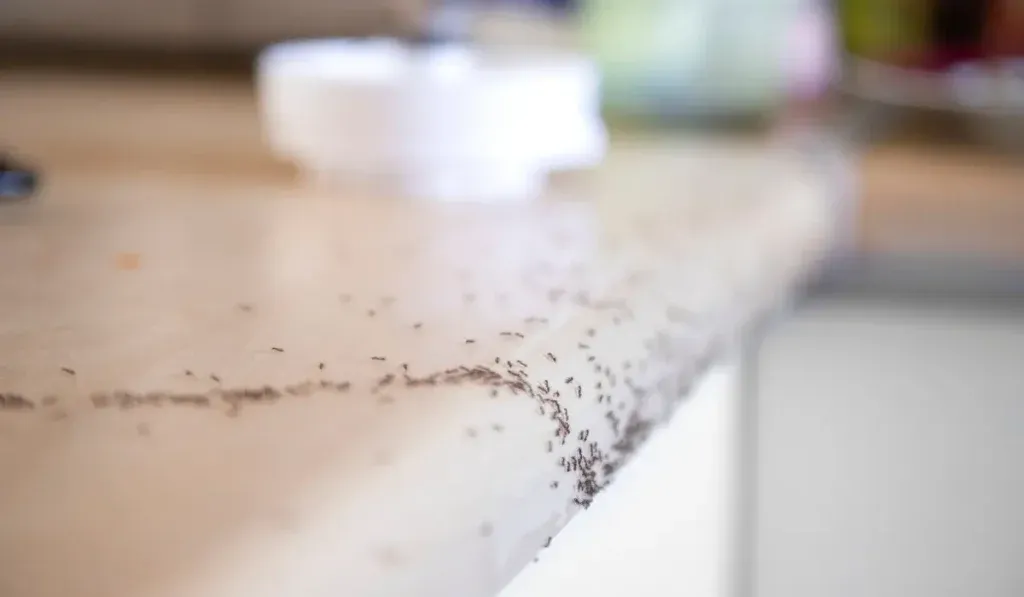
As late summer gives way to cooler temperatures, many homes in the Big Horn Basin and Billings begin to see ants inside. One day, the kitchen looks fine, the next a trail marches across the counter. It feels sudden, but it’s not. Early fall prompts ants to seek warm, safe places inside.
As nights get colder and food runs low outside, colonies search for steady food and warmth. That often means your kitchen, pantry, or basement. It may look random, but their behavior is predictable.
Once you understand why ants appear, you can take action sooner and decide when to call professional pest control. Let’s look at why ant activity spikes in early fall, what species you may encounter, and how to keep your home free from a pest problem all year.
Key Takeaways
- Ants move indoors in early fall when food and warmth outdoors decline.
- Carpenter ants can cause significant structural damage, while odorous house ants and black ants are common invaders in the kitchen.
- DIY ant killer and insecticide sprays rarely solve infestations because they don’t target the colony.
- Professional ant control from Kodiak builds layered defenses that stop colonies from spreading indoors.
Why Ants Move Indoors in Early Fall
When ants get into the house
General pattern for the Big Horn Basin and Billings area. Your timing shifts with the first cool snap and a warm or cold year.
Ants in the house in early fall usually trace back to survival instincts. As temperatures drop, ant colonies prepare for winter. Outdoors, natural food sources such as seeds, nectar, and insects become scarce. Indoors, however, food is readily available and conditions are more stable.
Ants follow pheromone trails that lead them directly to your home’s food supply. One crumb on the counter or an open bag of pet food can feed a line of ants. Gaps around baseboards, windows, and the foundation give them easy entry. If you don’t seal these spots, the trail will continue to grow.
In Wyoming and Montana, ant activity often spikes right after the first cool snap. A few scout ants can turn into an infestation if the colony locks onto your home as a steady food source.
Common Ant Species You May See Indoors
Several ant species show up in late summer and fall. Knowing the species helps you choose the correct ant control method.
Carpenter ants are a big concern because they can damage wood. They don’t eat it like termites. They carve out galleries to nest. Sawdust near baseboards or faint rustling in walls can mean carpenter ants are inside.
Odorous house ants (often called sugar ants) are common in kitchens. They leave a strong smell when crushed and are quick to trail toward sweet food sources.
Black ants, including pavement ants, also enter homes when outdoor conditions change. Pavement ants often build ant nests near foundations, then move inside when the weather shifts. Fire ants are less common in our area, but if they appear, their stings make them a serious concern.
Identifying the ant species is key to choosing whether to use ant baits, an ant killer, or call for professional pest control services.
Why DIY Ant Control Often Fails
Many people try DIY fixes, but quick sprays don’t last. Store sprays kill only the workers, not the colony. If treatment misses the nest, the ant problem returns.
Over-the-counter ant baits can reduce ant activity, but only if they match the species. Use the wrong bait, and ants may ignore it. Carpenter ants often need a different plan than odorous house ants.
Sealing with caulk can block some entry points, but ants persist. They find new routes through crawl spaces, basements, and wall voids. To stop an infestation, use layered defenses that hit the colony and remove food sources.
Professional Ant Control Solutions
Professional pest control does more than knock down trails. At Kodiak Pest Control, we inspect for ant activity, entry points, and nesting sites. We treat both inside and outside to prevent ants from gaining a foothold.
Our technicians treat more than just the foundation. We cover wider outdoor areas and target cracks, crevices, baseboards, and landscape harborage. This proactive pest control plan gives you strong protection all year.
If carpenter ants or termites are suspected, we check for structural damage and provide targeted treatments. Our process combines professional-grade ant baits, barrier applications, and follow-up services to make sure the ant colonies don’t return.
Prevention Tips for Homeowners
Make your home less inviting to cut ant activity:
- Store food in airtight containers and avoid leaving pet food out overnight.
- Wipe down countertops daily and sweep floors to remove crumbs.
- Use caulk to seal small cracks, gaps, and crevices around doors, windows, and baseboards.
- Regularly inspect basements, crawlspaces, and attics for signs of nesting.
- Empty trash frequently and rinse containers before placing them in bins.
These steps may not always get rid of ants completely, but they make your home less appealing as a food source. Paired with professional service, they build a strong defense against fall infestations.
Making the Right Choice for Ant Control in Wyoming and Montana
Ants don’t just disappear on their own. Once they find what they need indoors, colonies can stay active well into the colder months. Ignoring the problem often gives them more time to spread.
With 24 years of combined experience, Kodiak Pest Control has helped Wyoming and Montana homeowners with lasting ant control solutions tailored to local conditions.
Ready for a pest-free home? Contact us today to schedule your inspection and customized treatment plan.
FAQs
Why do I see ants only in early fall and not in summer?
Ants become more active indoors in early fall because outdoor temperatures drop, and natural food sources diminish. Your home offers warmth and easy access to food, making it an attractive alternative.
How do I know if I have carpenter ants or termites?
Carpenter ants leave sawdust, and you may see large winged ants when they swarm. Termites eat wood and cause bigger damage. A professional inspection can confirm which pest you have.
Can sealing entry points really stop ants?
Caulk and sealants help reduce access, but ants often find new routes. Sealing works best when combined with ant control treatments that target nests and eliminate the pheromone trail leading ants inside.




