
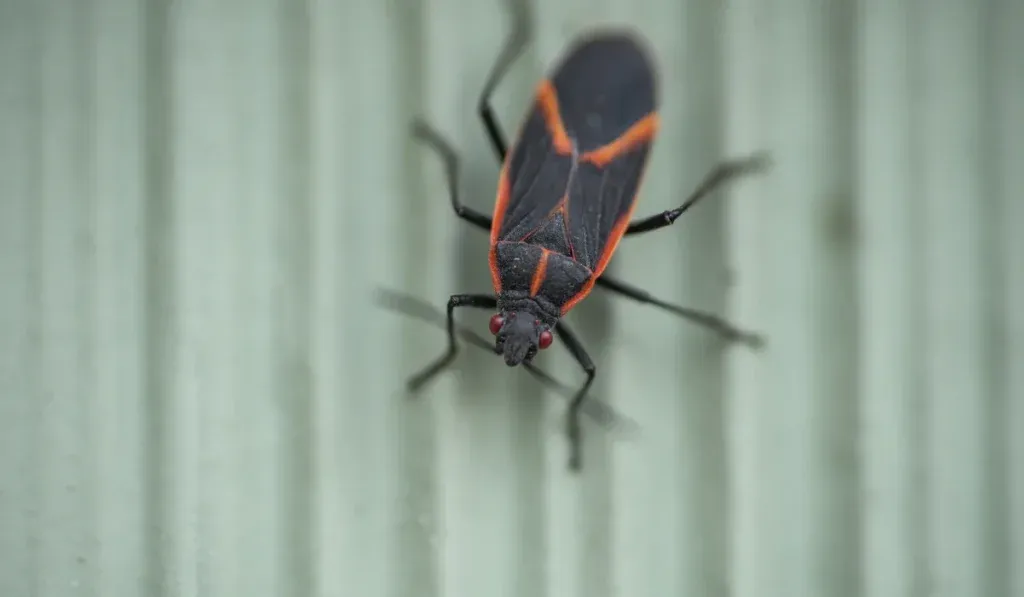
Each September in Wyoming and Montana, black-and-red boxelder bugs crowd the sunny side of homes. They do this to survive the coming cold.
As fall starts, they look for shelter. They gather on the siding and slip into wall voids and gaps. Homes near boxelder or maple trees are most likely to have bugs.
Boxelder bugs don’t bite or harm wood, but large groups are annoying. They can stain surfaces and have an unpleasant smell when crushed. Learn their life cycle and simple steps to keep them out.
Key Takeaways
- In September, boxelder bugs crowd warm siding before winter.
- Yards with boxelder or maple trees get more bugs.
- A second yearly generation matures in the fall, so numbers spike.
- Professional treatments give the best long-term control.
Why Boxelder Bugs Appear in September
When boxelder bugs cluster in
Typical pattern across Wyoming and Montana. Warm afternoons trigger the biggest clusters, so timing shifts with elevation and weather.
Boxelder bugs peak in September because they are seeking shelter before the onset of cold weather. After feeding on seedpods from female boxelder and some maple trees, they move to warm, protected spots.
They cluster on the siding, especially on the west-facing and sunny sides of homes, to soak up warmth. Then they slip into cracks, wall voids, or attics to spend winter. Warm, bright afternoons bring the most enormous swarms.
Identifying Boxelder Bugs
Adult boxelder bugs (Boisea trivittata) are actual bugs in the Rhopalidae family. They have black bodies with red lines on the wings and thorax. These marks make them easy to spot.
In summer, bright red, wingless nymphs molt and darken. By fall, most have matured into adults, creating a second yearly generation. That surge is why September feels so busy.
The Life Cycle of Boxelder Bugs
The boxelder bug life cycle begins in early spring, when overwintered adults emerge from their hiding places. They fly back to their host trees, mostly female boxelder trees and some maple trees, to feed and lay eggs. The eggs hatch into red nymphs that molt into adults.
By mid-summer, a second generation forms. By fall, adults surge, so homes near boxelder or maple trees see heavy activity each September.
Why Boxelder Bugs Are a Nuisance Pest
Boxelder bugs rarely harm buildings, but they are a nuisance. Seeing hundreds of them on the siding or windows can feel overwhelming.
Crushed bugs have a strong smell and can stain fabrics and walls. If they get into wall voids or attics, warm winter days can draw them back inside.
People in the Big Horn Basin and in Minnesota report the same issues. These insects don’t pose significant risks but quickly become bothersome when present in large numbers.
Preventing Boxelder Bug Infestations
Stop boxelder bugs before they reach your home. Start with simple maintenance:
- Seal entry points around siding, vents, and rooflines.
- Use caulk and weather-stripping to seal gaps around doors and windows.
- Address cracks and crevices in siding where insects might hide.
In some cases, professional treatments may be necessary. Vacuuming helps indoors, but long-term results come from a layered plan. Professionals apply targeted products around foundations and in the yard where bugs gather, so protection reaches beyond your walls.
Pest Control and Chemical Options
For heavy infestations, you might try pesticides, but results vary. Store products often fall short and don’t stop recurring problems. A more reliable option is professional pest control that combines inspection, treatment, and follow-up.
At Kodiak Pest Control, we utilize pest management strategies for Wyoming and Montana homes. We treat more than the foundation, including landscapes, borders, and tree bases where bugs live. By treating source areas, we cut repeat invasions.
Cooperative Extension and entomology programs offer advice on managing boxelder bugs, but local experts tailor treatments to regional conditions and building styles.
Making the Right Pest Control Choice in Wyoming and Montana
Boxelder bugs may be seasonal, but they don’t have to take over your home every fall. With 24 years of combined experience, Kodiak Pest Control knows how to handle the unique pest challenges across Wyoming and Montana. Our team utilizes proven methods that are tailored to the region’s climate and building styles, providing homeowners with long-term relief.
Ready for help that lasts? Contact us today to schedule your service.
FAQs
Why do boxelder bugs cluster on the sunny sides of houses?
They crowd sunny, west-facing walls to soak up heat. Warm siding helps them get ready for winter, especially on cool September days.
Do boxelder bugs cause damage to homes or trees?
No. Boxelder bugs don’t harm wood or structures. They feed on seedpods of female boxelders and sometimes maples, but this causes little to no tree damage.
How can I keep boxelder bugs out of my house?
Seal gaps with caulk and weather-stripping, fill cracks in siding, and use a vacuum for indoor bugs. For long-term results, choose a professional outdoor treatment plan.




