Most Montanans are familiar with the Northern black widow spider—especially folks who’ve stumbled into their cobwebs under a deck or near the shed. But lately, brown widow spiders have been making their way into conversations, too.
And for good reason: they’re not just a color variation. These two widow species are close cousins, but they come with some important differences.
Here’s how to tell which widow you’re dealing with and what to do about it if one turns up around your home.
Key Takeaways
- Black widows are common in Montana while brown widows are rare but may show up during warmer years.
- Brown widow venom is less toxic than black widow venom but it can still cause discomfort if you get bitten.
- Widow spiders hide in garages, basements, and crevices so sealing those areas helps stop an infestation early.
- Pest control helps remove spiders and egg sacs while protecting your home from future problems in hard-to-reach places.
Black Widow vs. Brown Widow: Quick Comparison
Black widow or brown widow? On file
Two widow cousins, two different rap sheets. Both carry venom, but one packs a far more potent bite. Here is how to tell them apart.
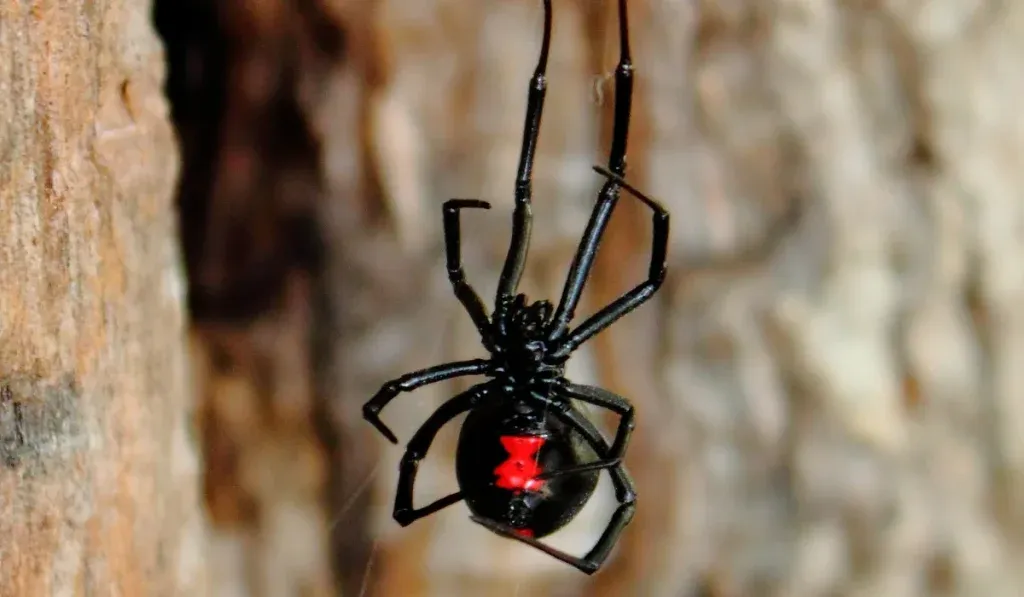
Black Widow
Western black widow
Brown Widow
Brown widow spider

You don’t need an entomology degree to tell the brown and black widow spiders apart, but knowing these differences can help you figure out what’s hanging out in your garage or under the deck.
| Features | Black Widow | Brown Widow |
|---|---|---|
| Color | Shiny black with a red hourglass | Dark brown to tan, sometimes gray |
| Hourglass Marking | Bright red hourglass on the underside of the abdomen | Orange to yellow hourglass marking |
| Common in Montana? | Yes – western black widow spider is widespread | Rare but showing up more, especially in warmer years |
| Native Range | Widespread in North America | Native to South Africa and South America; now in Florida, and Southern California |
What to Do If You Spot One Around Your Home
If you think you’ve found a widow spider near your home, you don’t need to panic—but you do want to be smart about it.
Here’s how we recommend handling things if one turns up on your property:
Identify It Before Acting
Both the southern black widow and western black widow are found across the U.S., but in Montana, it’s most likely the western species. Female black widows are the ones to watch for—the adult female has a more potent bite and that signature red mark underneath. Male black widows are much smaller and not considered dangerous.
Female brown widow spiders are easier to misidentify since they blend in with other house spiders or even Steatoda (false widows).
The best approach?
Snap a picture (from a safe distance) and call in pest control if you’re unsure. Local pros trained in pest management and entomology can ID it for you.
Don’t Swat or Smash
A widow spider bite usually happens when someone surprises or crushes one accidentally. These arachnids aren’t aggressive by nature.
That said, black widow bites can be painful due to the potency of their neurotoxin, and sometimes serious enough to need medical attention.
Bites from brown widow spiders aren’t as dangerous, but their toxicity can still cause pain, nausea, and discomfort according to poison control reports.
Best move? Back away and let a pro handle it
Check for Egg Sacs and Spiderlings
One adult female can lay dozens of egg sacs, each releasing hundreds of spiderlings. A single unnoticed infestation can get out of hand fast.
Keep an eye out in garages, basements, and sheltered corners of your property. Look under furniture and inside voids, especially around landscaping, woodpiles, and fence lines.
Seal Up Entry Points
Widows love quiet crevices, gaps in siding, and dark corners near warmth. Patch those up when you find them, especially around foundations and under eaves.
This won’t just help with spiders—it’ll help with all kinds of pests trying to sneak in.
Schedule Preventative Pest Control
Widows are just one species of spiders we deal with here in the Big Horn Basin and Billings. Our standard pest management plan includes control of widow species, brown recluse (which is not naturally found in Montana, by the way), wolf spiders, and others.
At Kodiak Pest Control, we don’t just spray the perimeter and call it good. We treat crevices, fence lines, garages, woodpiles, and outdoor living spaces.
That’s how we keep black widows from showing up in your boots and brown widow bites off your backyard to-do list.
Need help with spiders or want to stay ahead of an infestation?
Give us a shout. We’re proud to be the go-to pest control team for homeowners across Wyoming and southern Montana.