
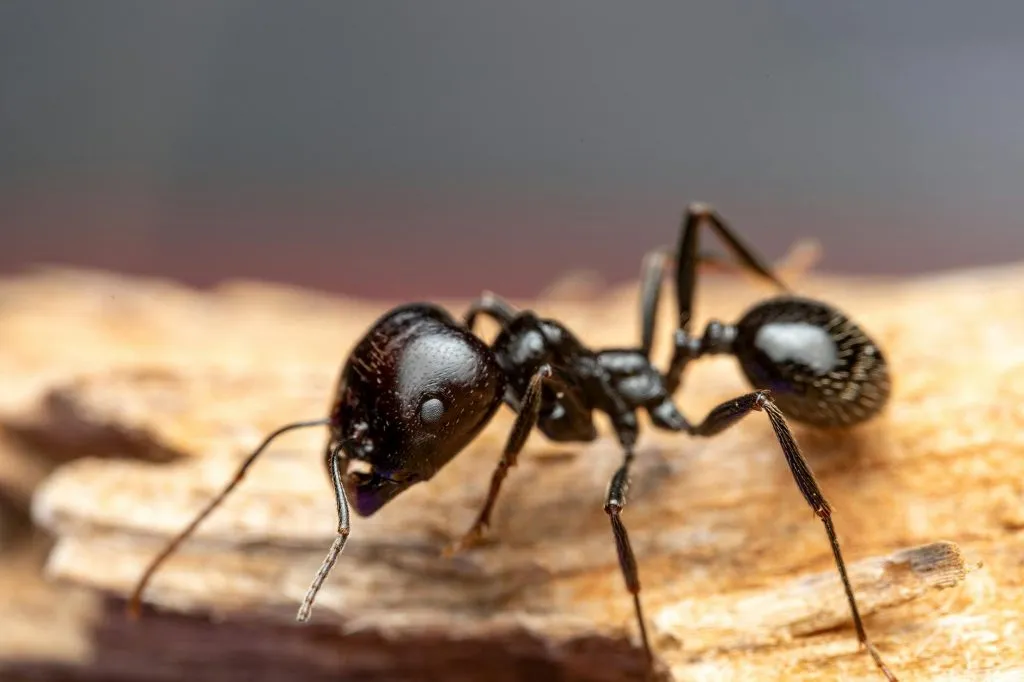
Carpenter Ant Pest Control can cause costly problems when early signs are missed. Learn the signs, risks, and when to call Kodiak Pest Control.
Key Takeaways About Carpenter Ant Pest Control
- Carpenter ants nest in wood and can be difficult to find because colonies are often hidden inside walls or other structures.
- Reducing moisture around your home is one of the most practical steps you can take to discourage carpenter ants from moving in.
- Locating and addressing the nest is central to carpenter ant control, and when the nest is not accessible, professional help may be needed.
- Not all ant baits work on carpenter ants. These ants may require specially formulated carpenter ant bait rather than products designed for other species.
How to Identify a Carpenter Ant Problem
Knowing what carpenter ants look like and where they nest is the first step toward addressing them. These ants belong to the Camponotus genus, and their signs can appear both inside and outside your home. Recognizing the difference between carpenter ant activity and other ant species helps you decide how to respond.
How to Tell Carpenter Ant Species Apart
Carpenter ant workers are wingless ants within the colony. Unlike termites or other wood-destroying organisms, carpenter ant workers do not eat wood. Instead, they excavate smooth galleries inside the wood to raise their young. This distinction matters because the signs they leave behind are different from other pests that consume wood.
According to the University of Tennessee Extension, piles of coarse sawdust or splintered wood indicate a carpenter ant nest nearby. If you see fine, powdery dust rather than coarse shavings, you may be dealing with a different pest entirely.
How to Spot Carpenter Ant Activity Inside Your Home
Carpenter ants can build nests indoors within intact, dry wood or water-damaged wood, as well as in insulation, crawl spaces, and attic spaces. Sawdust piles indicate carpenter ant activity. These shavings often collect beneath wooden structures where the ants are excavating.
Dead insects falling from a wooden porch may also indicate a carpenter ant nest above. Finding their nests indoors is often challenging because nests are hidden and not easily discovered. Careful observation of worker ants between sunset and midnight during spring and summer months can help you track them back to the nest.
Where Carpenter Ant Activity Shows Up Around Homes
Outdoors, carpenter ants build nests in tree stumps, firewood, fence posts, and wooden retaining walls. They tend to seek soft, moist wood in which to establish nests, particularly weathered wood that has begun to decay. Carpenter ants damage wood as they build their nests, so checking these areas regularly can reveal early signs of activity.
Stacked firewood near your home or aging fence posts can serve as nest sites. Monitoring these spots helps you catch activity before it moves closer to your house.
Exterior Entry Points Carpenter Ants Use
Carpenter ants nesting outdoors may move toward structures when conditions are right. Inspecting the foundation, door frames, window frames, and exterior penetrations of your home can reveal where ants are gaining access. Kodiak Pest Control begins every service with a thorough inspection of potential harborage areas, entry points, and current pest pressure.
Locating the nest is a key part of addressing carpenter ants. Because nests can exist both outdoors in wood features and indoors in hidden spaces, a complete inspection of both zones gives you the clearest picture of where activity is concentrated.
Why Carpenter Ant Pest Control Problems Develop
Carpenter ant problems rarely start overnight. A parent colony outdoors can expand without notice, sending workers into your home to forage for food and water. Understanding where these ants nest, what draws them closer, and how they move helps you spot trouble before it gets harder to manage.
Outdoor Nesting Areas for Carpenter Ants
Parent carpenter ant colonies can establish one or more satellite colonies in nearby indoor or outdoor sites. According to the University of Minnesota Extension, satellite nests typically contain workers, pupae, and mature larvae. Workers move frequently between the satellite nest and the parent colony, keeping both sites active.
Because these ants construct a maze of tunnels to extend the colony, wood and moisture sources outdoors give them a foothold close to your home. Wood in contact with soil can be especially inviting for pest development in general.
Food and Shelter That Attract Carpenter Ants
Foraging worker ants leave the nest and seek foods such as insects, decaying fruit, and honeydew. Worker ants from outside or inside nests may also forage for food and water inside a home, making kitchens and bathrooms common encounter spots.
Carpenter ants’ food preferences are complicated. According to Oregon State University Solve Pest Problems, they may not be attracted to ant-bait food sources, and success with baits may vary. This makes prevention and exclusion especially important alongside any baiting approach.
How Carpenter Ants Move Around Homes
Once foragers locate a food or water source, they take food back to the colony and share it with other ants, including the queen and brood. Foraging workers of some species secrete pheromone trails to lead other ants to food and water, which can increase traffic inside your home over time.
When foraging worker ants enter a home they can be a nuisance, and repeated sightings often indicate an established trail between an outdoor nest and an indoor food source.
Trails and Entry Points Carpenter Ants Use
Carpenter ants typically follow consistent routes between their nesting sites and food sources. If ants are foraging indoors from an outdoor nest, sealing entry points such as window sills and door steps can help exclude them from the structure.
Identifying these entry points is a key part of any inspection. Worker ants forage for food, feed the queen, and care for the young, so a steady line of ants usually traces back to a gap or opening where the colony accesses your home.
Risks of a Carpenter Ant Infestation
Carpenter Ant Pest Control matters because these pests can create real problems inside your home. Understanding what carpenter ants put at risk helps you decide how urgently to act and where to focus your attention.
Health Risks Linked to Carpenter Ants
Carpenter ants are not considered a direct health threat in the same way some other pests are. However, their presence indoors often signals a deeper issue. According to Mississippi State University Extension, indoor carpenter ant infestations often mean some type of moisture problem resulting from structural or plumbing leaks. Unaddressed moisture can attract additional pests, making the underlying conditions worth investigating even when the ants themselves are the initial concern.
Property Damage From Carpenter Ants
Carpenter ants can affect your property in different ways depending on where they nest. Colonies are often located in cracks between structural timbers, and the ants can also tunnel into structural wood to form nesting galleries. They may prefer moist or decaying wood, wood with dry rot, or old termite galleries.
Not all carpenter ant species cause the same level of concern. As University of Minnesota Extension notes, indoors they nest in wall voids and rotted wood, especially window frames, and some species do not cause structural damage to buildings. The level of risk depends on the species involved and the condition of the wood in your home.
Food Areas and Carpenter Ant Activity
Carpenter ants are nocturnal, which means activity around food-preparation areas may go unnoticed during the day. These pests can nest in basements, attics, crawl spaces, and garages, areas that sometimes connect to kitchens and pantries. Their foraging paths may bring them through living spaces where food is stored or prepared, making them a nuisance in those areas of your home.
When to Look Closer at Carpenter Ant Activity
Pay closer attention any time you notice carpenter ants indoors, especially near areas with moisture. Indoor sightings often point to a plumbing leak or structural moisture issue that needs to be resolved alongside any pest control work. Addressing the moisture source is just as important as addressing the ants themselves.
Also look more closely if you find activity near window frames, wall voids, or wood that has begun to decay. These are common indoor nesting sites. The sooner you identify the scope of the problem, the better positioned you are to address both the pests and the conditions supporting them.
Professional Pest Control for Carpenter Ants
Carpenter ants hollow out wood to form nests rather than consuming it the way termites do. While usually not as serious as termites, they can weaken building structures over time. That distinction matters when choosing a control approach, because the goal is to locate and destroy the nest, replace damaged or decayed wood, and address the conditions that invited the colony in the first place.
How to Reduce Attractants for Carpenter Ants
Prevention begins with moisture. According to the University of Minnesota Extension, the key to preventing carpenter ant problems indoors is to address high moisture conditions. Fix leaky pipes, improve ventilation in crawl spaces, and make sure gutters direct water away from your foundation.
Replacing damaged or decayed wood is another important step. Wood that has softened from water exposure is easier for carpenter ants to hollow out. Keeping wood dry and in good condition removes a primary nesting opportunity.
Why Carpenter Ant Control Starts With an Inspection
At Kodiak Pest Control, every service begins with an inspection. We evaluate the exterior and interior of your home for harborage areas, entry points, and pest pressure. We also assess the surrounding environment for conditions that may encourage carpenter ant activity.
Understanding where carpenter ants are nesting and how they are entering your home lets us plan treatment in a more targeted way. As the University of Minnesota Extension notes, locating and destroying the nest, repairing compromised wood, and correcting moisture problems form the foundation of effective control. A thorough inspection is how that process starts.
What to Expect During Professional Carpenter Ant Treatment
Sometimes reaching a carpenter ant colony requires drilling into wood or wall voids. As Texas A&M AgriLife Extension notes, you’ll want to hire a professional pest control operator who has the skill and equipment to do this. Kodiak carries additional licensing that allows us to treat further from the building than most competitors, creating layers of barriers between your foundation and the edge of your outdoor living space.
For carpenter ant work, we often use Taurus SC, a non-repellent product originally designed for termite control. Carpenter ants cannot detect it, so they walk through it and pick up tiny particles that transfer to others in the colony. We may also deploy Niban granules to cracks, crevices, and expansion joints near the foundation.
After treatment, we provide service notes disclosing activity levels, what we did, and any recommendations for cultural, sanitation, or physical strategies you can use to support the work we performed.
What to Expect From a Carpenter Ant Control Plan
Carpenter ants are covered under Kodiak’s normal pest control plan. A follow-up service occurs between three and five weeks after the initial visit, following the same process of inspection, treatment, and reporting. Regular services then continue every two months to maintain coverage.
Our approach is proactive. Rather than waiting for carpenter ants to appear inside, we treat harborage areas out in the yard and landscape so pests have a harder time reaching your home. We treat the foundation, door frames, window frames, eaves, exterior penetrations, concrete edges, fence lines, ornamental borders, and bases of trees and shrubs as part of our standard service scope.
For Unlimited Pest Control Service, we offer a guarantee on structural pests including carpenter ants. If activity returns between regular visits, we come back at no additional charge.
Bottom Line on Carpenter Ant Pest Control
Carpenter Ant Pest Control starts with understanding what draws these ants to your property and then taking steady, practical steps to address those conditions. Reducing moisture, replacing decayed wood, and keeping an eye out for worker ant activity are the foundations of a solid approach. When colonies are hidden inside structural wood, locating the nest on your own can be difficult, and professional help may be the most practical next step, since licensed operators can drill into wall voids and apply non-repellent products directly to the nest. If you suspect carpenter ants in or around your home, reach out to Kodiak Pest Control to schedule an inspection.
Frequently Asked Questions
How Do I Know If I Have Carpenter Ants or Termites?
Carpenter ants hollow out wood to build nests but do not consume it. Termites, by contrast, feed on wood. If you notice piles of sawdust-like debris near wooden structures, carpenter ants may be the cause. Watching for large worker ants moving along consistent trails, especially in the evening, can also help you tell the two apart.
Can I Handle Carpenter Ants on My Own?
You can reduce conditions that attract carpenter ants by lowering moisture levels indoors and removing decayed wood around your property. However, nests are often hidden and not easily discovered, which makes full control a challenge without professional assistance. A pest management professional can locate nests and apply targeted treatments.
What Conditions Attract Carpenter Ants Indoors?
High moisture is a primary factor. Carpenter ants may prefer moist or decaying wood for nesting. Leaky pipes, poor ventilation in crawl spaces, and water-damaged framing can all create conditions that encourage activity inside your home.
Should I Worry About Carpenter Ants in Trees Near My House?
Colonies nesting in nearby trees can become a concern if ants are traveling from those trees into your home. Monitoring foraging trails between trees and your structure helps you gauge whether the outdoor colony poses a risk to the building itself.
Our methodology: how we research pest control topics
Every Kodiak Pest Control article follows the same standard we hold our service work to: clear, accurate, and grounded in what actually works on a real Montana or Wyoming home. Homeowners across Billings and the Big Horn Basin count on us for honest pest information they can act on, and we treat the writing the same way.
We build our content from a combination of government guidance, peer-reviewed research, and the patterns our technicians see across homes in the regions we serve. Here is how we approach each article:
Studying pest behavior
We start with how each pest actually lives — where it nests, how it spreads, and what conditions support it. The high desert and basin climates of our service area shift pest pressure across the year, and understanding pest biology in this regional context is what keeps our recommendations practical.
Reviewing health and home risks
We review research on how each pest affects human health and home structures. Some pests are a nuisance. Others trigger allergies, carry bacteria, or cause structural damage. Knowing the actual risk helps homeowners decide how urgently to act.
Using Integrated Pest Management
Our recommendations are grounded in Integrated Pest Management (IPM), the framework supported by the USDA and EPA. IPM combines monitoring, sanitation, exclusion, and targeted treatment to reduce pest populations while limiting unnecessary product use.
Prioritizing prevention and lasting protection
A pest problem rarely ends with one treatment. We focus on the conditions that allow infestations to start in the first place — moisture, food sources, gaps around the home, harborage zones — because long-term control depends on changing the environment, not just treating the symptoms.
Citing peer-reviewed and government sources
Whenever possible, we support our recommendations with peer-reviewed studies, university extension research, and guidance from agencies like the EPA, CDC, and USDA. Each source we cite is listed at the end of the article.
Why trust us
Kodiak Pest Control is owner-operated by Jacob Haslem, serving homeowners across Billings, Laurel, Billings Heights, and Lockwood in Montana, and across Cowley, Lovell, Powell, Worland, and Greybull in Wyoming. We are a regional operation that knows the pests, the climate, and the homes in our service area.
That same standard runs through our content. The information you read here reflects what our technicians see in the field, what current research supports, and what we have learned from servicing homes across the Big Horn Basin and the Yellowstone County region.
Our credentials
- Owner-operated by Jacob Haslem
- Service across Billings, Laurel, Billings Heights, Lockwood (MT) and Cowley, Lovell, Powell, Worland, Greybull (WY)
- General pest control, specialty pest services, and seasonal treatments
- Trained pest control technicians on staff
- Continuous review of research, regulations, and regional pest pressure
Sources and standards we reference
To keep our content accurate and up to date, we rely on established research and authority sources, including:
Environmental Protection Agency (EPA):
Guidelines on product use, labeling, and approved applications.
Centers for Disease Control and Prevention (CDC):
Public-health guidance on pests that affect human health, including mosquitoes, ticks, rodents, and cockroaches.
United States Department of Agriculture (USDA):
Integrated Pest Management standards and pest biology research.
National Pest Management Association (NPMA):
Industry standards, pest behavior research, and seasonal trend reporting.
Montana State University Extension and University of Wyoming Extension:
Peer-reviewed, region-specific research on pest biology and control methods relevant to Montana and Wyoming homes.
Peer-reviewed journals:
Research published in entomology, public health, and environmental science journals to support specific claims about pest behavior, health risks, and treatment efficacy.
Article sources
The following sources were specifically referenced in the research and development of this article:
- University of Tennessee Extension
- University of Minnesota Extension
- Oregon State University Solve Pest Problems
- Mississippi State University Extension
- University of Minnesota Extension
- Texas A&M AgriLife Extension
All information is accurate at the time of publication and is reviewed regularly to reflect current research and pest control standards.




