
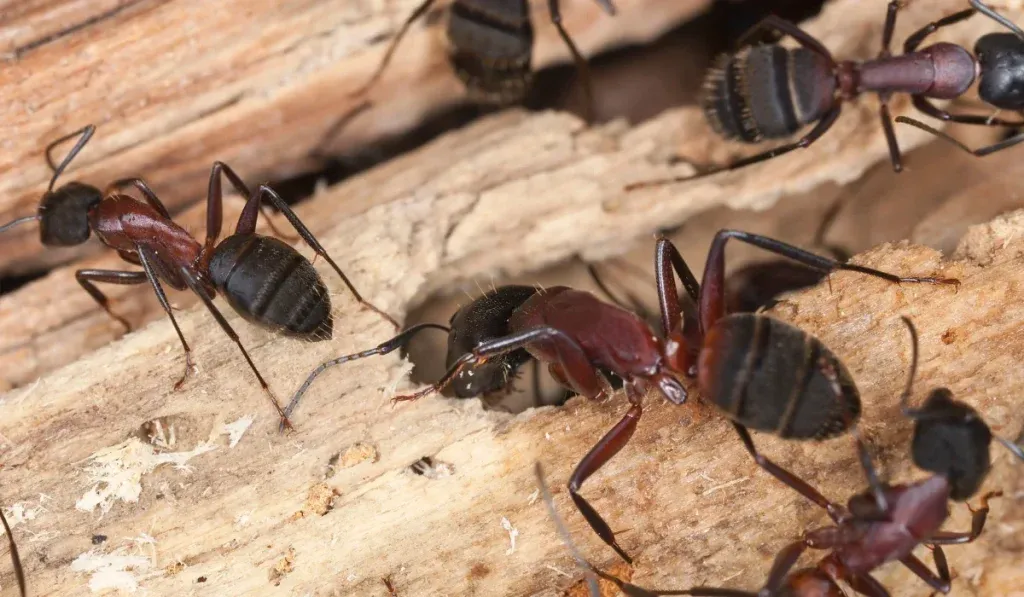
Here in Wyoming and Montana, we’re used to dealing with our fair share of pests. But when you spot ants around your kitchen, porch, or basement, knowing which type of ant you’re dealing with matters. Not all ant infestations are the same—and the wrong approach can make the problem worse.
Let’s dig into the key differences between these two common species of ants, and why some infestations are more than just a nuisance.
Key Takeaways
- Carpenter ants and black ants are common in our area, but cause very different problems for homeowners.
- Carpenter ants are big and damaging, while little black ants are tiny and more of a nuisance indoors.
- Sawdust piles, hollow wood, wall sounds, and food trails help tell which kind of ant you’re dealing with.
- Calling pest control services is the best way to stop ant problems and prevent bigger issues later.
Carpenter Ants vs. Black Ants: Key Takeaways

Two of the most common ants we see in the Big Horn Basin and Billings area are carpenter ants and black ants (often called little black ants).
And trust us—when it comes to these ants, the stakes aren’t even in the same ballpark.
| Features | Carpenter Ants | Black Ants |
|---|---|---|
| >Size | Large (6–12 mm) | Tiny (1.5–3 mm) |
| Color | Black, reddish, or dark brown | Shiny black |
| Body Shape | Rounded thorax, heart-shaped head | Uneven thorax, small head |
| Petiole | One node | Two nodes |
| Mandibles | Strong jaws, used for chewing wood | Small but functional |
| Nesting Habits | Tunnels into wooden structures | Prefers soil, wall voids, and cracks |
| Food Sources | Sweet food, protein, honeydew from aphids | Carbohydrates, dead bugs, crumbs |
| Colony Size | Large colonies, satellite nests common | Smaller, localized colonies |
How to Spot the Difference Between These Ants
Carpenter or black ant? On file
Two ants turn up in Big Horn Basin and Billings homes, and they are not in the same league. One tunnels through framing, the other just raids the pantry.
Carpenter Ant
The wood tunneler
Little Black Ant
The pantry raider
If you’re a homeowner wondering whether you’ve got black ants or something more serious, here’s how to tell.
Sawdust-Like Piles Around Wooden Structures
Carpenter ants don’t eat damaged wood like termites, but they do chew through it to build nests.
If you’re seeing dust and dead insects around wood with significant damage, it’s likely from a carpenter ant nest.
You might find these piles under windows, decks, or anywhere moist wood exists—especially in basements or crawl spaces.
Faint Rustling Sound in Walls
It’s not just your imagination. A carpenter ant colony can grow so large that on a quiet night, you might hear a rustling sound from inside your wall voids or attic.
That sound? It’s worker ants expanding tunnels in the wood. And no, that’s not something to ignore.
Ant Trails Along Windowsills and Baseboards
When ant trails show up again and again in entry points or places like your windowsills, kitchen counters, or pantry, it’s usually little black ants.
They’re persistent foragers, often showing up in large numbers, especially around spilled drinks, sticky jars, or pet food bowls.
Ants Swarming Sweet or Greasy Foods
If ants are raiding the cat’s kibble or anything sugary left out on the counter, that’s a strong clue you’ve got house ants—typically black ants—chasing food sources.
These guys love carbohydrates and anything rich in fats or proteins, and they’ll follow a pheromone trail to the jackpot.
Soft or Hollow-Sounding Wood
Tap your baseboards or deck posts. If the wood sounds hollow or flakes away easily, that’s not a weather issue—it’s likely significant structural damage from a carpenter ant infestation.
These ants can compromise your home’s structural integrity over time, which is why early detection is so important.
Why Pest Control Professionals Are the Smart Move
We get it—around here, there’s a strong DIY spirit.
But with ants, especially carpenter ants, you’re not just dealing with surface activity. They build complex nests, often with satellite colonies spread throughout a structure.
At Kodiak Pest Control, we don’t just treat the ant problem you see. We get to the root of the issue. Our pest management team inspects your entire property. Then we build out a custom ant control plan to solve the issue long-term.
And because we’re local, we understand the seasonal shifts that drive ant behavior in this region. We’ll help you get rid of carpenter ants before they become a costly issue—or keep black ants from becoming a recurring problem.
Need help fast?
Call us now. We often offer same- or next-day service in most parts of the Big Horn Basin and Billings.




