
Spiders are a normal part of life in Montana. Whether you live in Billings, Cody, or anywhere across the Big Horn Basin, you’ll likely spot a few around your home or workplace during the year. Most Montana spiders are harmless and actually help control insect populations outdoors. Still, seeing one inside your living space can be unsettling.
For many homeowners and tenants, the challenge is spider identification. It can be difficult to tell whether the spider you found in the garage is a harmless garden spider or something more concerning, like a black widow. Many species look similar at first glance, and their hiding spots often keep them out of sight until they suddenly appear.
Learning what the most common spiders look like and where they tend to hide can make these encounters much less stressful. This guide walks through everyday Montana spiders, their identifying features, and the places they often settle around homes and commercial buildings.
What Montana’s Common Spiders Look Like
Many Montana spiders share a similar body structure, but a few key features can make spider identification easier. Looking at markings, leg shape, and web patterns often helps determine the kind of spider you’re seeing.
Body Markings and Patterns
Color and markings provide some of the clearest identification clues. The black widow spider, for example, has a shiny black body with a distinctive red hourglass marking on the underside of the abdomen. This hourglass marking identifies the western black widow, scientifically called Latrodectus hesperus, which is the most recognized venomous spider in North America.
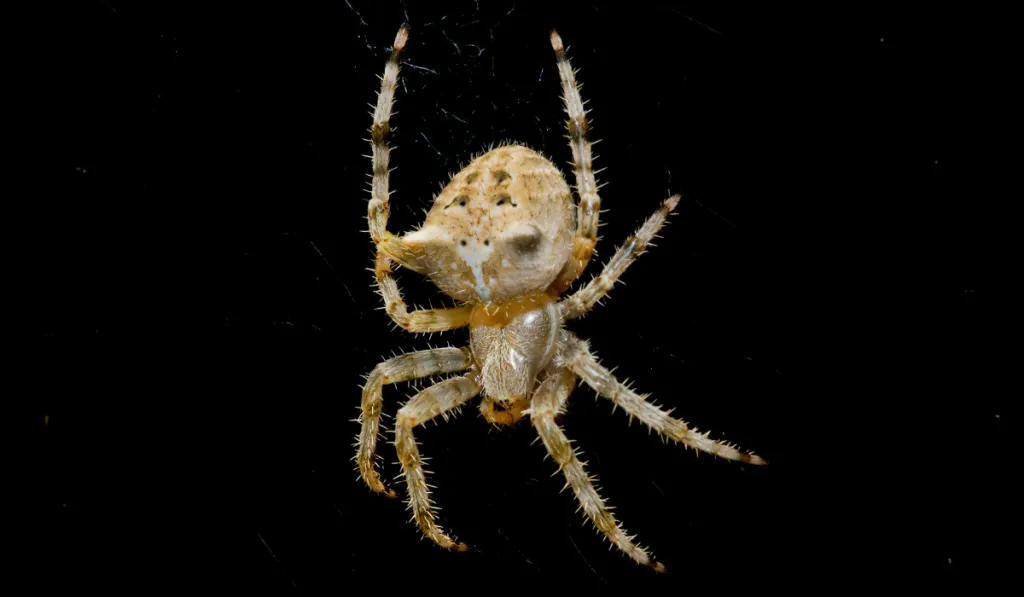
Orb-weaver spiders from the Araneidae spider family often display bold patterns on their abdomens. The cat-faced spider, Araneus gemmoides, is a well-known example found across Montana. Another species, the marbled orb weaver (Araneus marmoreus), has a bright orange or marbled pattern that stands out when you look closely.
These markings help distinguish orb-weavers from other Montana spiders that appear more uniform in color.
Leg Structure and Movement
Leg structure and behavior also help identify different spider groups. Wolf spiders, members of the family Lycosidae, have long, strong legs built for hunting. Unlike web-building spiders, wolf spiders actively roam the ground searching for insects.
Crab spiders from the family Thomisidae look quite different. Species in the genus Xysticus hold their front legs outward like a crab. Instead of chasing prey, they wait quietly on flowers or vegetation for insects to land nearby.
Jumping spiders, part of the spider family Salticidae, have shorter legs and large forward-facing eyes. These spiders move in quick hops rather than smooth crawling, which makes them easy to recognize during spider identification.
Web Shapes and Egg Sacs
Web style is another helpful identification feature. Orb-weaver spiders create circular webs that are often stretched between branches, fences, or porch lights. These webs are designed to capture flying insects.
Other spiders build sheet webs with a funnel-shaped retreat. Funnel-web spider species, including grass spiders and the hobo spider, belong to the family Agelenidae and often spinwebs across lawns and landscaping.
You may also notice silk egg sacs tucked in corners of garages, sheds, or basements. These egg sacs signal an active spider population nearby and are often left behind by a house spider.
The Everyday Spiders You’ll See Most
Montana’s most wanted spiders
Six suspects turn up around Montana homes. Here is how to tell the dangerous one from the harmless help.
Western Black Widow
Latrodectus hesperus
Wolf Spider
Lycosidae
House Spider
Steatoda (false widow)
Funnel Weaver / Hobo
Agelenidae
Orb-Weaver
Araneidae
Crab Spider
Thomisidae
Jumping Spider
Salticidae
Several species account for the most common spiders found around homes and commercial buildings in Montana. Learning to recognize these everyday spiders helps you quickly identify what you’re seeing.
Wolf Spiders
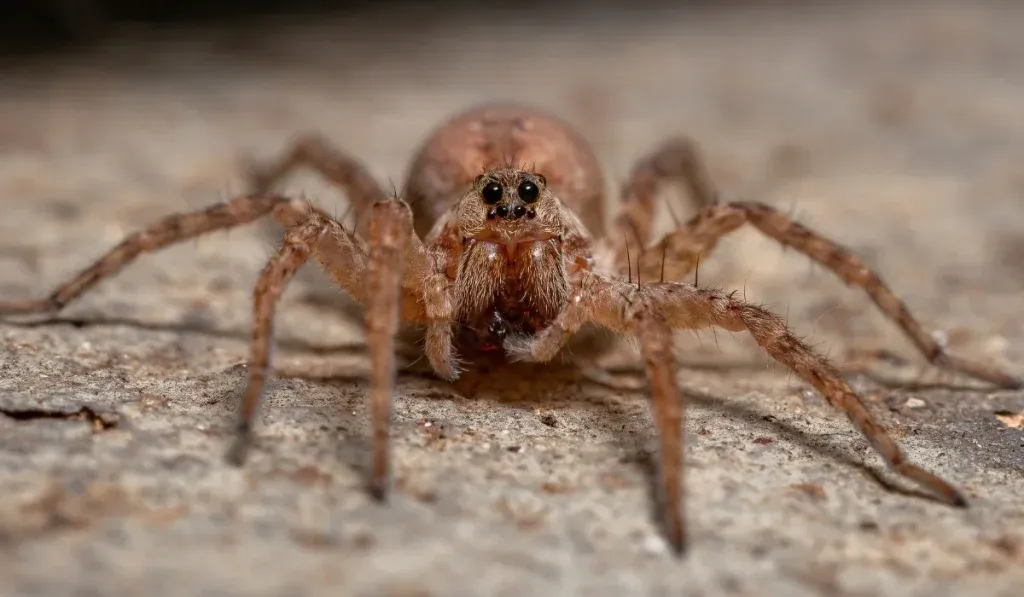
Wolf spiders are among the largest spiders commonly found in Montana. Members of the family Lycosidae are fast-moving hunters that do not rely on webs to capture prey.
These spiders frequently appear indoors in garages, basements, or entryways when they wander in search of insects. Despite their intimidating size, wolf spiders are not aggressive and rarely bite.
If a bite does occur, symptoms are usually mild, though any spider bites should be monitored and may require medical attention if discomfort increases.
Black Widow Spiders
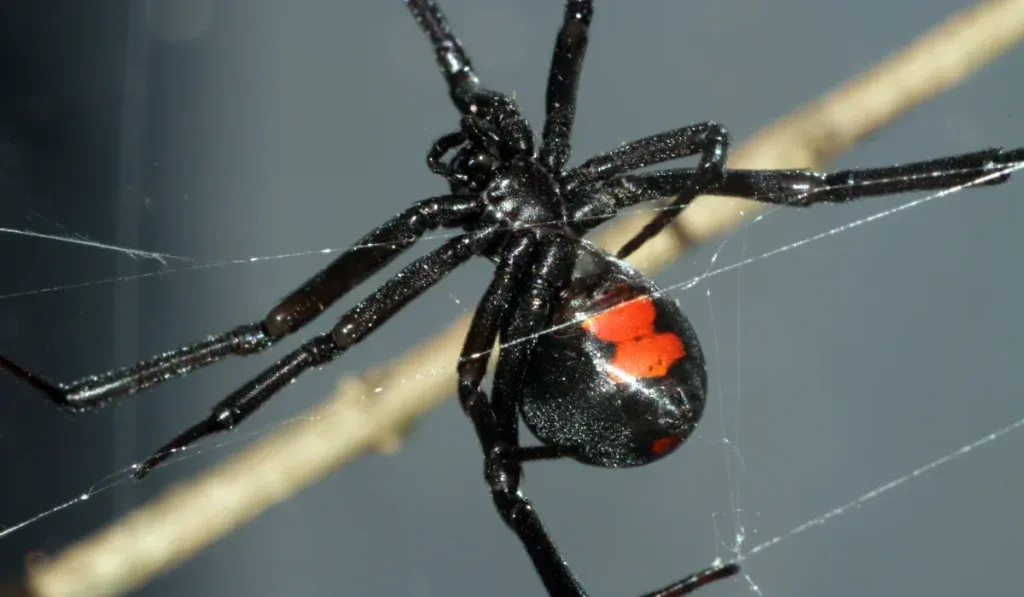
The black widow spider is the most recognized venomous spider in Montana. The western black widow is identifiable by the red hourglass marking on its abdomen.
Black widow spiders prefer quiet, undisturbed areas. Around homes and commercial buildings, they often hide beneath decks, inside sheds, around woodpiles, or within storage spaces.
Although bites are uncommon, they can cause significant symptoms and may require medical attention. Because of this, accurate spider identification is important whenever a black spider with a potential hourglass marking is found.
Orb-Weaver Spiders
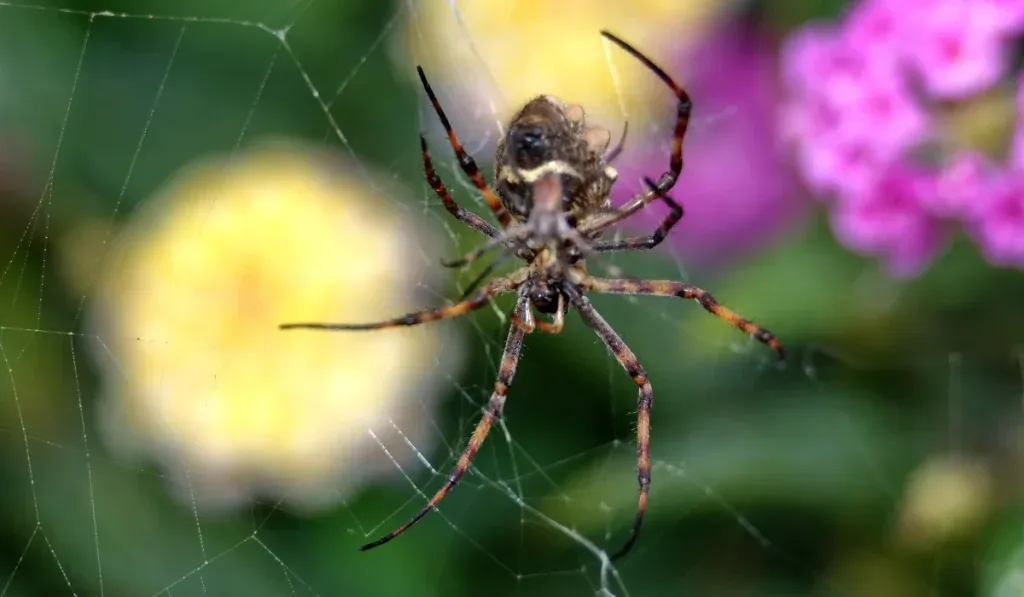
Orb-weaver spiders are among the most noticeable outdoor spiders in Montana. Members of the Araneidae spider family spin large circular webs that appear across yards, gardens, and patios.
The cat-faced spider is one of the most common species seen around homes. Another striking orb-weaver is the banded garden spider, which builds large webs between shrubs or near porch lights.
These spiders look intimidating because of their size, but they are harmless and play an important role in reducing populations of flying insects.
Crab Spiders and Jumping Spiders
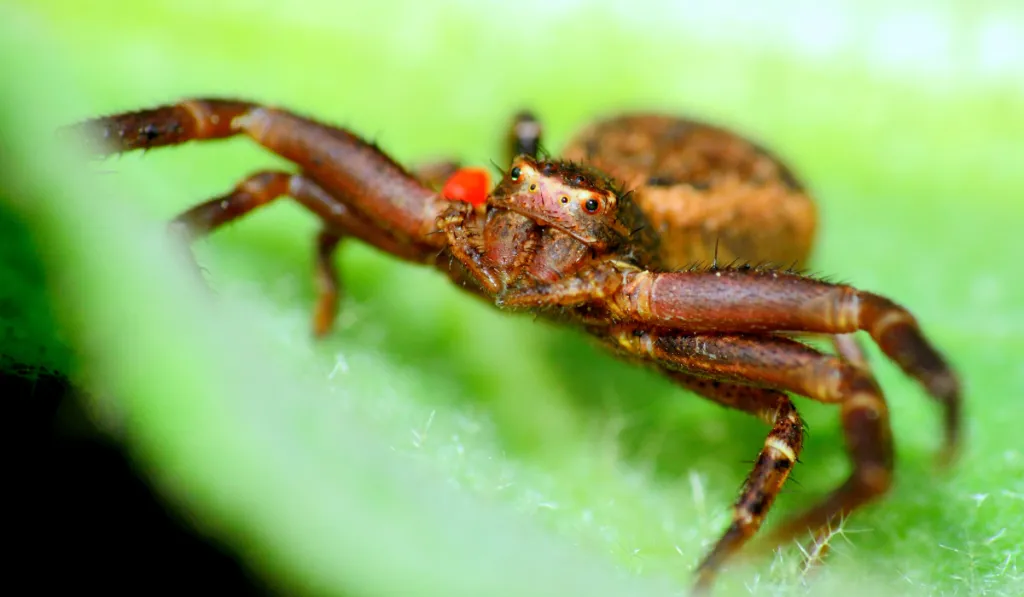
Crab spiders are often found in gardens and flower beds. These spiders belong to the family Thomisidae and rely on camouflage to ambush insects visiting plants.
Jumping spiders, part of the spider family Salticidae, are small but easy to recognize because of their curious behavior. Their quick movements and large eyes make them one of the most distinctive spiders in North America.
One interesting example is the red-spotted ant mimic, a jumping spider that resembles an ant to avoid predators.
House Spiders and Funnel Web Species
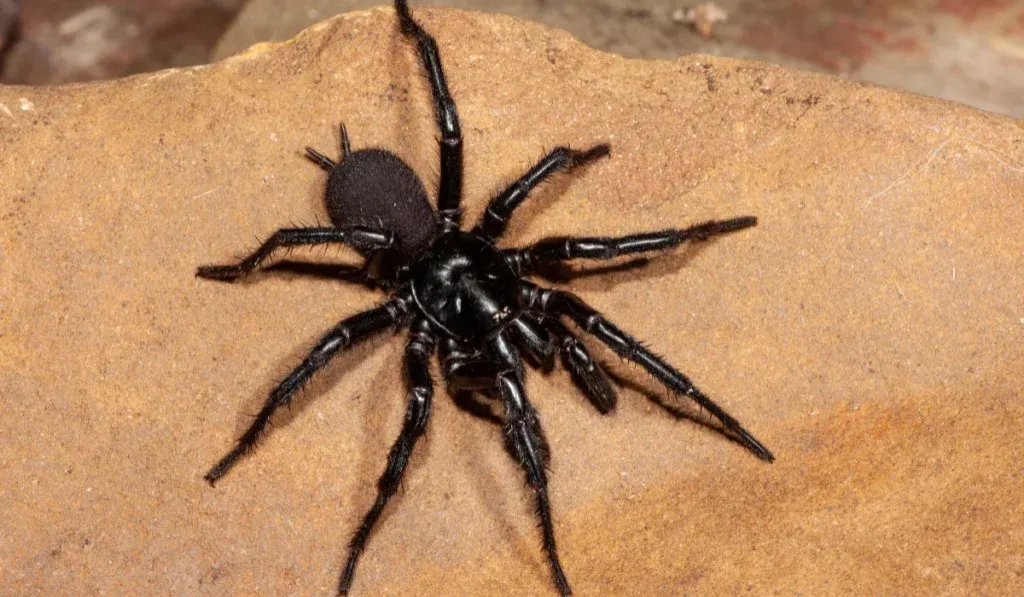
House spiders commonly live indoors year-round. Many belong to the family Theridiidae or the genus Steatoda, sometimes called false widow spiders because they resemble black widow spiders without the hourglass marking.
Funnel web spider species such as the aggressive house spider and the hobo spider build sheet webs that lead into a funnel retreat. Grass spiders also belong to this group and often spin sheet webs across lawns and landscaping edges.
Where They Hide Indoors and Outside
Spiders choose hiding places that offer shelter and a steady supply of insects. In Montana, several areas around homes and businesses tend to attract spider activity.
Basements and Crawl Spaces
Basements are one of the most common hiding spots for Montana spiders. These areas stay cool, dark, and undisturbed, making them ideal for house spiders, wolf spiders, and funnel web species.
Sheet webs often appear in corners, along foundation walls, and behind stored items. Because insects frequently enter through foundation gaps, basements provide a reliable food source for spiders.
Garages, Sheds, and Storage Spaces
Garages and sheds provide similar conditions. Stacked boxes, unused equipment, and stored materials create protected hiding places where spiders can build webs.
Black widow spiders sometimes appear in these spaces, especially around woodpiles or outdoor equipment that remains untouched for long periods.
Regularly inspecting these areas can help prevent spider populations from growing.
Landscaping and Yard Structures
Many spiders prefer outdoor landscaping areas. Orb-weaver spiders frequently build webs between shrubs, tree branches, fences, and patio railings.
Grass spiders and other funnel-web spider species often construct sheet webs across lawns and along landscaping borders.
Near ponds or water features, you may occasionally see a fishing spider hunting along the water’s edge.
Exterior Walls and Lighting
Exterior lighting attracts insects, which naturally attracts spiders. Garden spiders and orb-weaver spiders often build webs around porch lights, entryways, and outdoor seating areas.
Because insects gather near lights at night, spiders may repeatedly rebuild their webs in these locations.
When Spiders Become a Recurring Problem
Seeing an occasional spider is normal in Montana. However, frequent sightings can indicate that spiders have found ideal conditions around your property.
Frequent Indoor Sightings
If spiders appear inside regularly, it often means prey insects are also present. Species such as wolf spiders and house spiders commonly move indoors when food sources are available.
Reducing indoor insect activity is often the first step toward lowering spider populations.
Web Buildup in Multiple Areas
Large numbers of webs around foundations, decks, and landscaping features may signal a growing spider population.
While outdoor webs from orb-weaver spiders are common during warmer months, repeated webbing along building edges can suggest that spiders are settling close to the structure.
Removing webs regularly helps disrupt nesting behavior.
Identifying Venomous Species
Although most Montana spiders are harmless, identifying venomous spiders is important. The western black widow is the most concerning species commonly encountered in the region.
The brown recluse spider is often mentioned in spider identification searches, but it is extremely rare in Montana.
Recognizing the difference between harmless species and venomous spiders helps determine when professional spider control is appropriate.
Schedule a Spider Inspection in Montana
Spiders play an important role in Montana’s ecosystem, but they shouldn’t take over your home or business. When spider activity becomes frequent, a professional inspection can identify where spiders are living and how they’re entering the structure.
Fall spider control begins with locating webs, egg sacs, and hiding areas around foundations, landscaping, and storage spaces. Treating these outdoor areas helps prevent spiders from reaching your living space.
Kodiak Pest Control provides residential pest control and commercial pest control throughout the Big Horn Basin and Billings region. With 24 years of combined experience, the team focuses on treating the outdoor areas where spiders live so they never make it inside your home or business.
If spiders keep appearing around your property, scheduling a spider inspection is a smart step toward reliable spider control in Montana.
FAQs
What are the most common spiders in Montana?
The most common spiders in Montana include wolf spiders, jumping spiders, crab spiders, orb-weaver spiders such as the cat-faced spider, and funnel-web species such as grass spiders and the hobo spider. Most are harmless and help reduce insect populations around homes and businesses.
Are black widow spiders common in Montana?
Yes. The western black widow spider can be found in parts of Montana, especially in quiet outdoor areas like sheds, woodpiles, and under decks. They are recognizable by their red hourglass marking and should be handled carefully.
Should you worry about spider bites in Montana?
Most spider bites in Montana are mild and occur when a spider is accidentally disturbed. However, bites from venomous spiders like the black widow may require medical attention. If you are unsure about the spider species, professional spider identification can help.




