
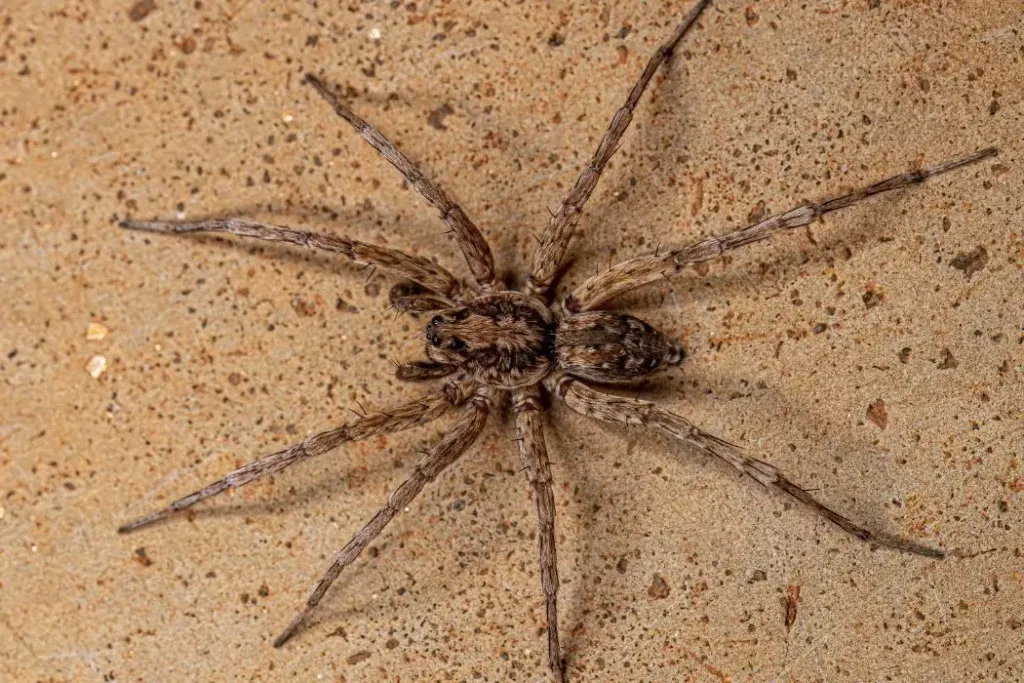
Wolf spiders are a common pest in Montana homes, especially in basements, garages, and crawl spaces. Unlike other house spiders, they don’t build webs to catch their prey. Instead, these hairy spiders pounce on their victims with their large size and large eyes.
If you’re dealing with a spider problem, here are five effective strategies for how to prevent them from returning.
Key Takeaways
- Wolf spiders are not as dangerous as black widows or brown recluses, but their presence can still be unsettling.
- Small cracks and gaps let wolf spiders inside, so sealing entry points helps keep them out of your home.
- Outdoor lighting attracts insects that wolf spiders hunt, so switching to yellow lights can help reduce their presence.
- Professional pest control services inspect, treat, and create barriers to stop wolf spiders from coming back for good.
1. Seal Cracks and Crevices
One of the best ways to control wolf spiders is to stop them from getting inside in the first place. These arachnids sneak in through small crevices in the foundation, gaps around windows and doors, and other unnoticed entry points.
Homeowners should use caulk to seal cracks and apply weather stripping around doors and windows to prevent these pests from slipping in.
2. Reduce Outdoor Lighting
Wolf spiders are drawn to areas with an abundant food source, which often means places where insects gather. Outdoor lighting attracts crickets, moths, and other bugs that these large-eyed hunters prey on.
To help with pest management:
- Switch to yellow or sodium vapor lights, which are less appealing to insects.
- Reposition lights away from doors and windows to keep bugs away from your home.
3. Eliminate Hiding Places Around Your Home
If wolf spiders are getting inside, they’re likely hiding somewhere nearby. These hunters prefer to stay in dark, undisturbed habitats like closets, basements, garages, and crawl spaces. Outside, they take shelter in mulch, leaf litter, woodpiles, and overgrown vegetation.
To discourage them, homeowners should eliminate hiding spots by:
- Keeping yards tidy.
- Removing excess debris.
- Storing firewood at least 20 feet away from the house.
- Reducing clutter indoors.
4. Use Sticky Traps
Unlike other types of spiders, wolf spiders don’t spin webs to trap their prey. Instead, they actively roam in search of food. Female wolf spiders also carry their egg sacs on their backs, leading to sudden outbreaks of spiderlings.
Because of this, sticky traps are one of the most effective DIY methods to control wolf spiders inside the home. Place these traps along baseboards, near entry points, and in dark corners where spiders are likely to travel.
If you’re seeing multiple spiders caught in your traps, it may indicate a larger wolf spider infestation.
5. Try Natural Repellents
Some homeowners swear by natural repellents like peppermint oil to deter wolf spiders. Mixing a few drops with water and spraying it around doors, windows, and baseboards may help keep them away.
Another option is boric acid, which can be lightly applied in crevices and corners to kill spiders and other pests over time.
Contact a Professional to Keep Wolf Spiders Out for Good
If the infestation persists or you’re worried about wolf spider bites, don’t wait—call in the pest control companies.
At Kodiak Pest Control, we don’t just spray and walk away. We take a targeted approach to spider control.
Our team of exterminators inspects your home for entry points, hiding spots, and food sources, then applies residual treatments around baseboards, crevices, and other problem areas. We also de-web your home, treat garages, crawl spaces, and basements, and create a protective barrier to keep wolf spiders from coming back.
If you’re tired of dealing with these fast-moving hunters, contact us now.
Let us handle it—so you don’t have to.




