
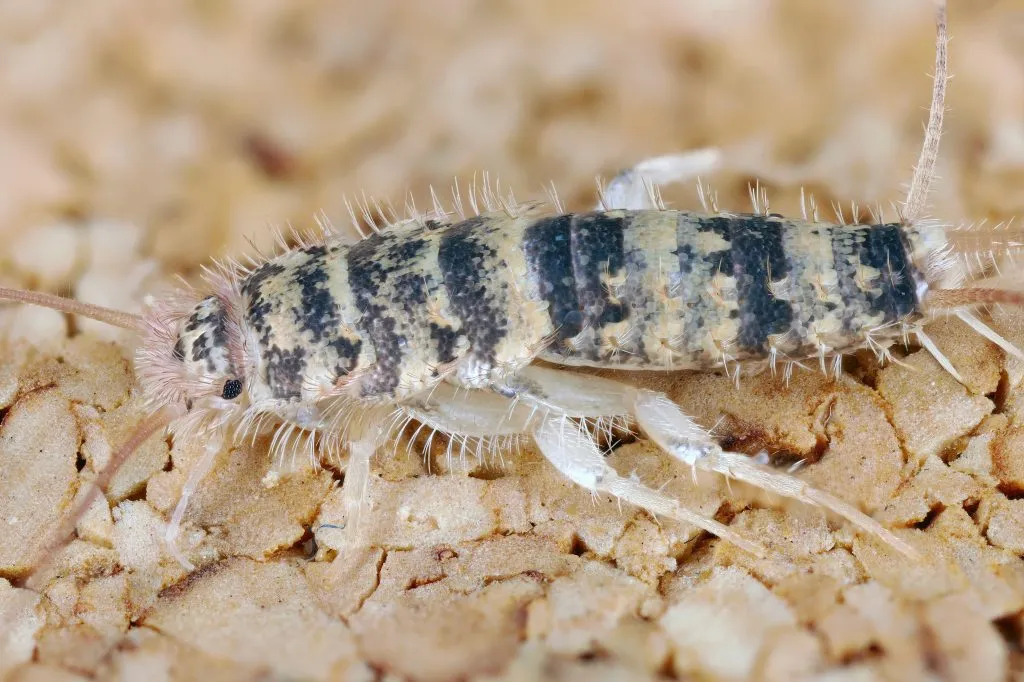
Firebrats in the house are a sign of heat rather than moisture. Unlike silverfish, which prefer cool damp areas, firebrats (Thermobia domestica) thrive in temperatures above 90°F and concentrate near furnaces, water heaters, ovens, and dryers. In Cowley and the surrounding Big Horn Basin, where homes run forced-air heating through long cold winters, the mechanical rooms and utility spaces that firebrats prefer stay warm year-round. They feed on starchy and protein-rich materials including book bindings, wallpaper paste, flour, cereals, paper, and fabric, and they’re nocturnal enough that most homeowners find the damage before they ever see the insect.
Key Takeaways
- Firebrats are mottled grayish-brown, about half to three-quarters of an inch long, and prefer temperatures between 90 and 108°F. Finding them near your furnace, water heater, oven, or dryer is the clearest identification signal.
- The most effective first step is locating and reducing the heat source they’re using. Missouri Extension’s silverfish and firebrat guide notes that lowering the temperature in areas around hot water pipes, water heaters, and boilers will reduce firebrat populations.
- Firebrats damage books, paper, wallpaper, flour, cereals, fabric with natural fibers, and anything containing starch or paste. An established population can cause significant damage to stored goods and books before it’s discovered.
How to Get Rid of Firebrats in Your Cowley Home
The sequence matters: reduce the heat environment firebrats need, remove the food sources they’re using, and then treat the population — in that order.
Reduce the Temperature in Infested Areas
Sealing gaps that allow heat to accumulate in adjacent wall voids and cabinet spaces reduces the thermal harborage firebrats exploit beyond the mechanical room. Lowering temperatures inside the mechanical room itself is less practical in Cowley’s climate but remains the most direct control if air circulation can be improved. Missouri Extension identifies temperature reduction near heat sources as the primary non-chemical control, noting that improved air circulation in these areas will usually lower temperatures slightly.
Remove Food Sources
Firebrats feed on starch, sugar, and protein-containing materials. Stored flour, cereals, and grains in paper or cardboard packaging near heat sources should be transferred to sealed hard containers. Books and paper stored near the furnace room or utility area are a food source and should be relocated or stored in sealed boxes. Wallpaper in older Cowley homes, particularly in utility areas, is an ongoing food source if firebrats are present. Eliminating accessible food reduces the infestation’s ability to sustain itself even if the heat environment remains favorable.
Apply Insecticide in Cracks and Crevices
Missouri Extension confirms that chemical insecticide treatments are often necessary to eliminate established firebrat infestations. Products containing pyrethroids or boric acid are available over the counter. Missouri Extension recommends treating cracks and crevices around and behind baseboards, shelves, bookcases, closets, and windows, with particular attention to void spaces inside walls near heat sources where firebrats concentrate.
Apply treatments in the evening when firebrats are active. Sticky traps placed near the furnace, water heater, or oven confirm where populations are concentrated before treatment and measure whether control is working after.
How to Identify Firebrats in a Cowley Home
Three things identify firebrats reliably before you ever see one clearly: where they appear, what color they are, and what they’ve damaged.
What Firebrats Look Like
Firebrats are carrot-shaped, wingless, and covered in grayish-brown scales with irregular darker mottling that gives them a speckled appearance. Utah State University Extension’s structural pest identification guide describes both firebrats and silverfish as half to three-quarters of an inch long, slender, wingless, and covered in scales. Three slender appendages extend from the rear of the body, and two long antennae extend from the head. They move in quick bursts and stop abruptly, making them difficult to observe when disturbed.
Michigan State University Extension’s firebrat resource notes that sticky survey traps can be used to capture specimens for species verification, which is useful when the insects are seen only briefly or only damage evidence is found.
Firebrats vs. Silverfish: The Key Difference
Both insects are closely related, similarly shaped, and damage similar materials. The critical difference is temperature preference. Silverfish prefer cool, damp areas like bathrooms, basements, and closets. Firebrats require heat, concentrating in furnace rooms, behind ovens, near water heaters, and in any space that stays consistently above 90°F.
Color is the most reliable visual distinction: silverfish are uniformly shiny silver-gray. Firebrats are dull grayish-brown with a mottled, speckled pattern. If the insects are appearing near heat sources rather than moisture sources, firebrats are the more likely identification.
Signs of Firebrat Damage
Firebrats feed at night and are rarely seen during the day. The most common first evidence is damage to materials rather than direct insect sightings. Look for small irregular holes in paper, books, magazines, or cardboard. Yellow staining on paper or fabric near heat sources is a firebrat sign. Shed scales may appear near feeding sites. Peppery-looking droppings near stored food, books, or wallpaper confirm feeding activity.
When to Call a Professional
Small firebrat populations caught early can often be managed with the steps above. Established populations that have spread beyond a single heat source, infestations in wall voids that are inaccessible for consumer spray applications, or situations where significant book or fabric damage has already occurred all benefit from professional assessment.
Kodiak Pest Control covers Cowley and the Big Horn Basin with pest services that include interior harborage inspection: identifying which heat zones in your home firebrats are using, where they’ve spread beyond the main source, and whether the population is in accessible cracks or inside wall voids that require targeted treatment. Kodiak’s Unlimited Program covers more than 60 pests with a pest-free guarantee. Quality Pro certified. Same-day service available.
Why Cowley Homes Are Vulnerable to Firebrats
Three Cowley-specific conditions make firebrats a more consistent problem here than in most Wyoming communities: heating season length, older building stock, and the region’s low relative humidity.
Long Heating Seasons
Cowley’s position in the Big Horn Basin means extended winters with significant periods of sub-freezing temperatures. Homes run forced-air heating systems, boilers, or wood heat for much of the year, keeping utility and mechanical spaces consistently warm. The area immediately surrounding a furnace, water heater, or wood stove in a Cowley home routinely reaches temperatures above 90°F from October through April.
Older Home Stock
Much of Cowley’s residential housing was built in an era when utility spaces, wall voids, and mechanical rooms had more gaps around pipes and penetrations than modern construction. These gaps create the warm, sheltered crevices firebrats use as harborage, and older wallpaper with starch-based paste is a food source that newer construction typically doesn’t provide.
Low Relative Humidity
Firebrats can tolerate humidity as low as 30%, making them well-suited to Wyoming’s characteristically dry climate. Unlike many household pests that require moisture to thrive, firebrats manage in the low humidity typical of Cowley and the Big Horn Basin as long as heat is available. Standard dehumidification, which reduces silverfish populations, has limited effect on firebrats.
Get Firebrats Out of Your Cowley Home
Firebrats near your furnace or water heater in Cowley are unlikely to leave without treatment. Kodiak’s technicians locate which heat zones firebrats are using, confirm the species, and apply targeted treatment in the cracks and wall voids where they’ve established. Locally owned since 2019. Same-day service available.
Contact Kodiak Pest Control to schedule a pest inspection in Cowley.
Frequently Asked Questions
How do I tell firebrats apart from silverfish?
Color and location. Silverfish are uniformly shiny silver-gray and prefer cool, damp areas like bathrooms and basements. Firebrats are dull grayish-brown with a mottled pattern and concentrate near heat sources: furnaces, water heaters, ovens, and dryers. If the insects are appearing near heat rather than moisture, firebrats are the more likely identification.
What do firebrats eat?
Firebrats feed on starch, sugar, and protein-containing materials. Common targets include flour, cereals, grains, paper, books, cardboard, natural-fiber fabric, wallpaper with starch-based paste, book bindings and glues, and dead insects. They do not eat synthetic fabrics or sealed plastic packaging.
How long does a firebrat infestation last without treatment?
Firebrats are long-lived insects. Missouri Extension notes they shed their skins more than 30 times per year and can live multiple years. An untreated population in a consistently warm location like a furnace room will persist and grow as long as the heat source and food materials remain available. They don’t resolve on their own.
Can I stop firebrats without pesticides?
For small or early-stage infestations, environmental modification may be enough. Missouri Extension identifies temperature reduction near heat sources and food source removal as the primary non-chemical controls. Sealing gaps around pipes reduces harborage, and transferring stored food to sealed hard containers removes the food supply. For established populations in wall voids or behind appliances, insecticide treatment is typically necessary.




