
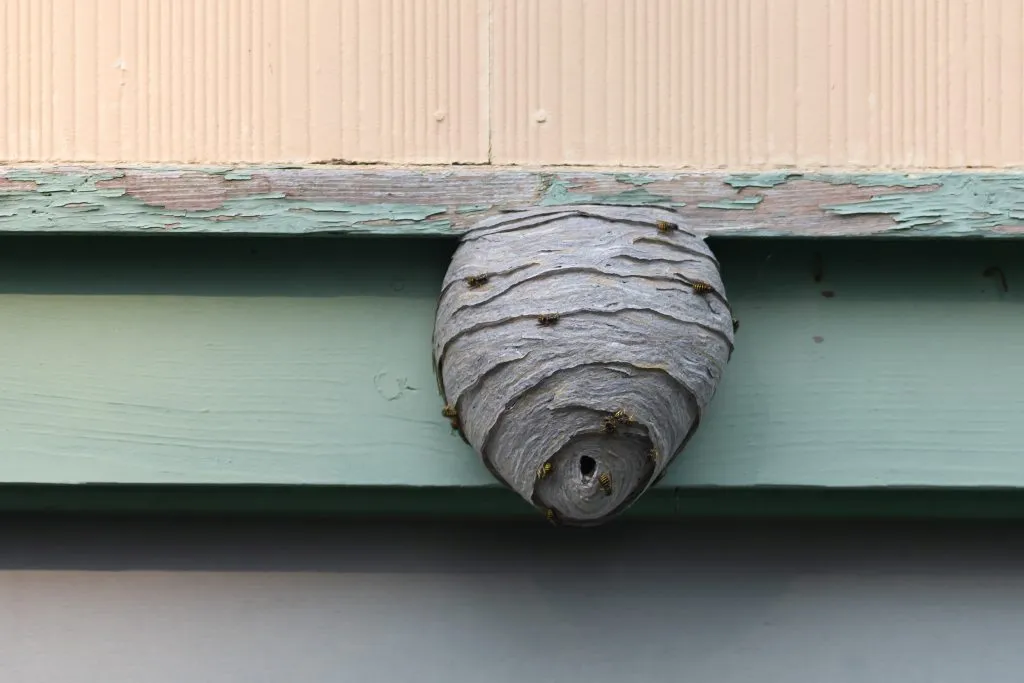
A hornet nest near a Laurel doorway, under an eave, or in a backyard tree is a different situation depending on size, location, and time of year. Some nests can be safely treated by a careful homeowner. Others, particularly large bald-faced hornet nests in late summer or nests inside wall voids or attic spaces, are situations where DIY removal creates more risk than it resolves. The right approach to hornet nest removal depends on species identification, nest size, and whether the nest is accessible without putting yourself in the path of a defensive swarm.
Key Takeaways
- Bald-faced hornets are the most common hornet species in Laurel and surrounding Yellowstone County. Their large, gray, football-shaped paper nests are found in trees, shrubs, and on building eaves. They are more aggressive than paper wasps and will defend the nest actively when disturbed.
- MSU Extension’s Montana social wasps guide recommends treating nests late in the evening, early morning, or on cool or rainy days when fewer workers are present outside the nest. Large nests are best left to pest control professionals.
- Nests in low-traffic locations can be left alone through fall. All hornet colonies die out each season. Only fertilized queens overwinter, and the nest itself is not reused the following year.
When to Remove a Hornet Nest and When to Leave It
Not every hornet nest in Laurel needs immediate treatment. Location and size are the two factors that determine urgency.
Nests That Can Wait
A bald-faced hornet nest in a tree at the back of a property, well away from foot traffic, high enough that the area below isn’t regularly used, and discovered in late summer can reasonably be left alone. MSU Extension confirms that wasp and hornet nests are abandoned each fall when temperatures drop, workers and males die, and only fertilized queens overwinter elsewhere. The nest will be empty by late October in Laurel’s climate and won’t be reused the following spring.
Marking the nest location and avoiding the area until after the first hard freeze allows the colony to complete its season without any intervention. Once temperatures have dropped and activity has stopped, the empty nest can be removed without protective gear or chemical treatment.
Nests That Need Treatment
A nest near a door, along a fence line children pass regularly, under a deck, at eave height where it’s at head level, or inside a wall void or attic space warrants prompt treatment. Bald-faced hornets respond to vibration, shadow, and movement within their defensive range. MSU Extension notes that large hornet colonies can contain hundreds to thousands of insects, and the nest can reach the size of a basketball or larger by late summer.
Nests inside wall voids and structural cavities are a specific case where professional treatment is strongly recommended. Treating a nest inside a wall and failing to fully eliminate the colony can force hornets deeper into the structure or to find a new exit through interior surfaces.
DIY Hornet Nest Removal: When It’s Reasonable and How to Do It Safely
Nest size, location, and season determine whether DIY treatment is reasonable or whether calling a professional is the safer call.
What You Need
Full protective coverage is essential: long sleeves, long pants, gloves, and a veil or face covering. Any exposed skin is a target. Hornet sprays designed for aerial nests produce a concentrated stream with a range of 15 to 20 feet, allowing treatment from a safer distance than standard sprays.
Timing and Application
Treat after dark or in the early morning before sunrise, when the majority of the colony is inside the nest and activity is lowest. MSU Extension recommends late evening, early morning, or cool, rainy conditions to ensure more nest members are present inside during treatment.
Approach from downwind and position yourself with a clear path to retreat. Apply the spray directly into the entrance hole at the bottom of the nest. Do not knock the nest down before treating; this releases the remaining colony without eliminating it. Leave the nest in place for 24 to 48 hours after treatment before removing it to allow residual product to contact any remaining individuals.
What Not to Do
Knocking a nest down with a stick or pole while the colony is active is the most common cause of dangerous encounters. Sealing a structural entry point before treating forces the colony to find a new exit, often through interior walls. Treating during midday when workers are actively foraging means more insects are outside and between you and the nest when it’s disturbed.
How to Identify a Hornet Nest in Laurel
What looks like a hornet nest in Laurel is more likely a paper wasp nest or yellowjacket nest. Each species behaves differently and requires a different removal approach.
Bald-Faced Hornets
The bald-faced hornet (Dolichovespula maculata) is the species most Laurel homeowners encounter. Adults are black with white or ivory markings on the face and the tip of the abdomen. Workers range from half an inch to three-quarters of an inch long. Their nest is immediately recognizable: a large, gray, football-shaped paper structure with a single entrance hole near the bottom, typically suspended in a tree, shrub, or attached to a building eave. Nests start small in spring and can reach basketball size by late August.
Bald-faced hornets are more aggressive than paper wasps. They defend their nest actively, can sting multiple times, and will pursue perceived threats away from the nest.
Paper Wasps
Paper wasps build smaller, open-comb nests that resemble an upside-down umbrella suspended from a short stalk. The individual cells are visible without any paper covering. Paper wasp nests are far more common in Laurel than true hornet nests and are generally less aggressive. MSU Extension notes that paper wasps are typically not aggressive unless the nest is directly disturbed.
Small paper wasp nests under eaves can often be treated with a standard aerosol wasp spray applied at night without the same risk level as a large bald-faced hornet nest. Knowing which species you’re dealing with changes the approach significantly.
Western Yellowjackets
Western yellowjackets are frequently called hornets but are a separate species. Their nests are typically underground in existing rodent burrows or in wall voids rather than suspended above ground. If the nest is at ground level or inside a structure rather than hanging in a tree or from a building surface, it’s almost certainly a yellowjacket nest rather than a true hornet nest, and the treatment approach differs.
When to Call a Professional
Large nests discovered in late summer, any nest inside a wall void or attic space, nests at heights that require a ladder, or any situation where someone at the property has a known allergy to stinging insects all warrant professional treatment.
Kodiak Pest Control handles hornet nest removal across its Laurel and Yellowstone County service area. Kodiak’s technicians treat 50% further into the yard than standard services, addressing not just the visible nest but the harborage and foraging zones that sustain the colony. Quality Pro certified. Pest-free guarantee on covered pests. Same-day service available.
Why Hornet Activity Picks Up in Late Summer in Laurel
Laurel’s position in the Yellowstone River valley, surrounded by agricultural land and open terrain, creates specific late-summer conditions that elevate hornet activity in residential areas.
Colony Maturation and Defense
Bald-faced hornet colonies grow steadily from spring through summer. By late July and August the final generation of the season is being raised, which includes the fertilized queens that will carry the colony into next year. MSU Extension notes that this late-season brood makes workers particularly defensive, since protecting next year’s queens is the colony’s primary focus at this stage.
Food Competition
As the season progresses and natural insect prey becomes less abundant, foraging workers range further from the nest. Yellowstone County’s warm late summers keep colonies active into September, and a large late-season population combined with defensive behavior and wider foraging range produces the most frequent conflict with Laurel homeowners.
Get Your Laurel Hornet Nest Removed Safely
Kodiak’s technicians handle the nest removal without putting you in the path of a defensive swarm. They have the equipment, the products, and the timing knowledge to do it right. Locally owned since 2019. Same-day service available.
Contact Kodiak Pest Control to schedule hornet nest removal in Laurel.
Frequently Asked Questions
Will a hornet nest come back next year?
No. Hornet colonies die out each fall. Workers and males die as temperatures drop, and only fertilized queens overwinter in protected locations away from the nest. The nest itself is abandoned and not reused. New nests are built from scratch each spring by overwintering queens, typically in a different location.
Is it safe to remove a hornet nest myself?
Small nests early in the season, or empty nests after fall colony die-off, can be removed safely with standard precautions. Large nests in late summer, nests inside structural voids, and nests in locations where retreat is limited are situations where professional removal is the safer choice. Anyone with a known allergy to stinging insects should not attempt DIY removal.
How do I tell the difference between a hornet nest and a wasp nest?
Bald-faced hornet nests are large, gray, football-shaped paper structures with a smooth outer surface and a single entrance hole at the bottom, typically suspended in trees or from building eaves. Paper wasp nests are smaller, open-comb structures resembling an upside-down umbrella where the individual cells are visible. If the nest is at ground level or inside a structure, it’s almost certainly a yellowjacket nest rather than a true hornet nest.
When is the best time to treat a hornet nest?
After dark or before sunrise, when the majority of the colony is inside the nest and activity is lowest. MSU Extension specifically recommends late evening, early morning, or cool, rainy conditions. Midday treatment when workers are actively foraging produces the most dangerous encounters.




