
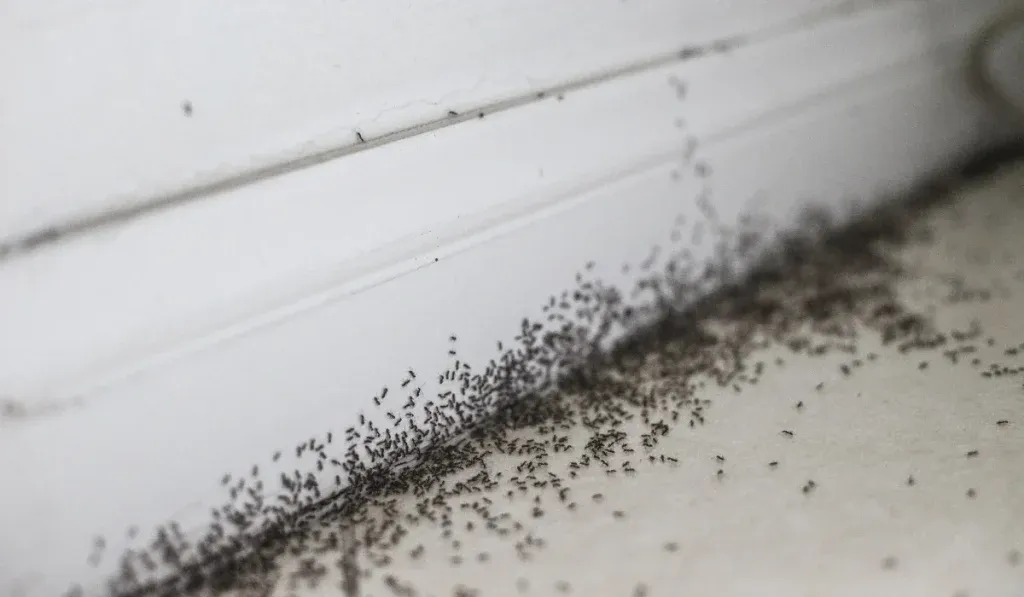
You spot a line of little black ants crawling across your countertops or along the baseboards, and suddenly you’re wondering—how are they even getting in?
It’s a common issue for homeowners here in the Big Horn Basin and Billings. They don’t need much of an invitation to move in, especially when they’re in search of food, water, or shelter.
Let’s break down how different types of ants—especially small black ants and black carpenter ants—sneak into your house, and what steps you can take to stop the invasion.
Key Takeaways
- Black ants come inside through cracks, gaps, and crevices found around doors, windows, plumbing, and baseboards.
- Food crumbs, pet food, and water leaks attract ants that follow scent trails and build nests inside your walls.
- DIY products like borax may help kill ants but often cannot stop a growing ant nest or infestation.
- Pest control professionals can find the source of the problem and treat it before ants return or cause property damage.
Where Are Black Ants Coming From?
There’s no single route. Small and big black ants are persistent and take advantage of multiple weak spots around your property. Here are some of the most common ways they find their way inside and why these entry points can turn into a full-blown problem if left unchecked:
Cracks and Crevices Around Your Foundation

Black ants, including the tiny black ants you often see in kitchens, love to exploit small crevices in your foundation, door frames, and baseboards. These gaps act as perfect entry points for worker ants out on ant trails in search of food.
Once inside, they’re not just random wanderers. They follow scent trails, also known as pheromone paths, left by others from their ant nest.
A little caulk can help seal up these spots, but if you’re dealing with a larger ant infestation, it’s best to think about long-term ant control rather than just patching holes.
Gaps in Window Sills and Door Frames

Window sills and door frames tend to shift with time and weather, leaving small gaps. These become easy access points, especially for little black ants looking for food sources like crumbs or pet food on your floors and countertops.
One of the best things you can do is make sure your food is stored in sealed containers or airtight containers. That way, you’re not unknowingly setting out a buffet for ants.
Plumbing Penetrations and Wall Voids

It’s not just about food—black ants also need water sources.
Plumbing areas, like under your kitchen sink or around bathroom pipes, provide both moisture and warmth, making them prime real estate for ant colonies. These spots lead straight into wall voids, where they can nest without being disturbed.
Carpenter ants, especially black carpenter ants, are known for creating nests inside walls. They can even cause damage similar to termites if left unchecked.
If you’re seeing ant activity near plumbing, that’s a sign you may have a more serious pest problem.
Around Electrical Outlets and Light Fixtures

You might not expect black ants around electrical outlets, but these tiny pests can fit into the smallest gaps. Once inside your walls, worker ants can quickly spread through multiple rooms. That’s why some homeowners find them popping up in different areas with no clear trail.
This is where DIY methods often fall short.
If ants are in your wall voids, you’ll need more than a surface spray—you’ll likely need ant bait or professional pest control service to truly kill them at the source.
Pet Doors or Gaps Under Exterior Doors

Black ants are smart enough to follow any trail that leads to food, and that includes pet doors or gaps under exterior doors.
If you keep pet food bowls near these areas, you’re likely attracting them. It’s a good idea to move pet food indoors and keep it stored in sealed containers when not in use.
Placing an EPA-approved insect repellent near these access points can help deter them temporarily, but for ongoing pest management, sealing the gaps and reducing food sources is key.
Outdoor Bridges
Sometimes, ant problems start outside.
Black ants travel across tree limbs, shrubs, or even along fence lines that touch your house. From there, they find cracks or gaps to sneak inside. Colonies can also nest in tree stumps and then move indoors when conditions outside become less favorable.
Trimming back vegetation and removing dead wood can reduce these bridges. Still, if they have already made it in, it’s time to look at hiring a pest control professional to assess and treat the problem effectively.
Get Your Home Back from the Ants
Many homeowners like to try DIY solutions first, and that’s totally understandable. Sprinkling borax or diatomaceous earth along trails can help kill them over time, and peppermint oil can act as a repellent.
Just remember, while these can help reduce the activity of many species of ants, they won’t eliminate a well-established nest.
When you’re seeing a recurring black ant problem, your best move is to call a local pest control company. At Kodiak Pest Control, we know the kind of ants that plague homes in this area, and we have the tools to take care of the infestation at the source—before it becomes a bigger pest problem.
Reach out today to schedule an inspection. We’ll help you get your house back from the ants—fast and effectively.




