
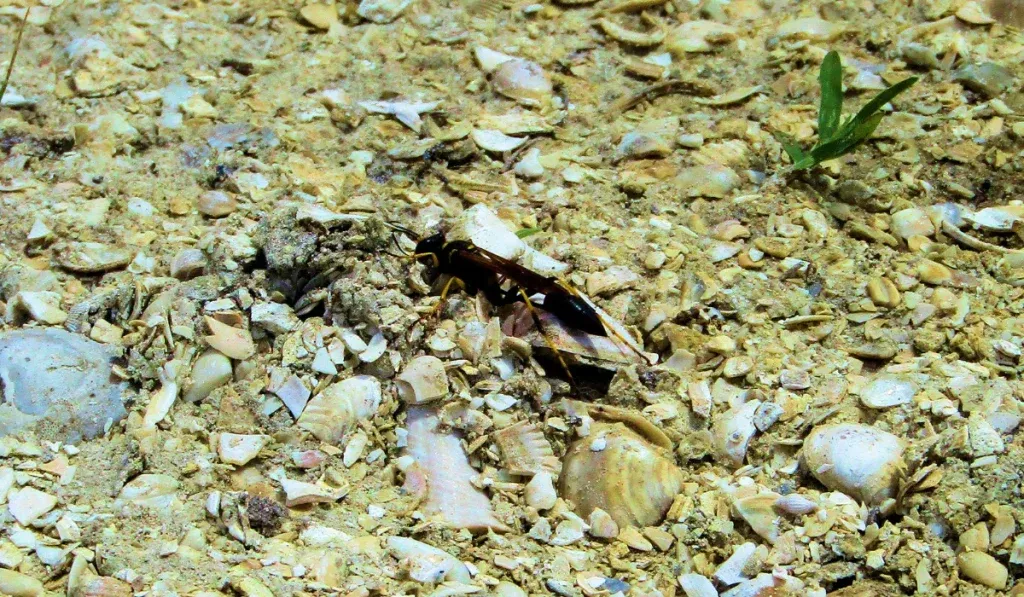
When you’re enjoying your backyard and suddenly spot wasps darting in and out of the lawn or garden beds, you’re probably dealing with ground wasp nests. Unlike visible nests under the eaves built by paper wasps or hornets, ground wasps nest in hidden underground spots, making them harder and more dangerous to remove.
Instead, they build nests in hidden underground cavities, making them difficult and dangerous for homeowners to remove on their own.
Here’s what you should know before trying to get rid of ground wasps.
Key Takeaways
- Yellow jackets and solitary wasps behave differently, and knowing which one you have helps guide your next steps.
- Ground wasps often build nests in hidden spots, and most people notice them only after someone gets stung.
- Disturbing a ground nest during mowing or walking can trigger aggressive swarms and cause serious allergic reactions quickly.
- DIY sprays and traps often miss the nest, while trained exterminators remove wasps safely and stop them from returning.
Types of Wasps That Nest in the Ground
Not all wasps that build nests in the ground behave the same.
Yellow jacket wasps are the most common culprits behind aggressive infestations. These social wasps can establish large underground nests with thousands of workers, especially around food sources like compost piles or outdoor trash bins.
Meanwhile, cicada killers and digger wasps—both solitary wasps—might look intimidating, but rarely sting unless directly provoked.
Identifying the type of these stinging insects helps determine how to safely eliminate them and prevent future issues.
Inspect Your Property for Hidden Nest Sites
Ground wasps can pop up anywhere—along fences, under decks, or near sprinkler boxes. They’re often mistaken for garden pests until someone gets stung. They build nests in soft soil, rodent burrows, or even under stepping stones.
It’s not uncommon for us to find active nests near dog runs, playsets, or even just a few feet from a home’s foundation.
By the time you notice, infestations are already in full swing.
Avoid Disturbing the Nest Site
In rural areas like the Big Horn Basin and Billings, ground wasps become a serious issue in late summer when their colonies are at their peak.
They can defend their nest entrance aggressively, especially when disturbed by vibrations from mowing or foot traffic.
For example, yellow jackets can swarm within seconds, and if someone has an allergic reaction to their stings, the consequences can be serious.
If you see a steady flow of wasps entering or exiting the ground, rope off the area immediately and keep pets and kids far away.
Skip the Dish Soap and DIY Wasp Traps
Some folks swear by home remedies like pouring soapy water or dish soap down a nest opening. Others set out wasp traps or sprinkle diatomaceous earth in the yard, hoping to kill wasps naturally.
The truth is, these DIY methods aren’t effective against underground nests. They might kill a few wasps, but they won’t reach the queen or fully collapse the colony.
Worse, using wasp spray or aerosol products without protective clothing puts you at serious risk of multiple stings.
Call a Professional Pest Control Company
The safest, most effective way to get rid of ground wasps is to call a professional pest control company. At Kodiak Pest Control, our technicians are trained to treat yellow jacket nests with dust and transfer-based products that reach deep into underground nests.
In some cases, we return for a second visit to ensure survivors haven’t started to rebuild. Whether we’re treating a hornet nest in a crawlspace or dealing with a particularly stubborn patch of ground hornets, we handle the issue at the source.
Timing is key, too.
Treatments are often most effective in the early morning when wasps are less active. And because we focus on full pest management, we don’t just treat the nest.
We target surrounding areas, eliminate wasp pheromones, and use repellent applications to reduce the chances of reinfestation.
Why Professional Wasp Removal Works Best
It’s not a matter of whether you can kill wasps yourself—it’s a matter of whether you should. They might be pollinators, but they’re not the kind you want hanging around your kids’ play area or your weekend barbecue.
If you’re dealing with wasps in the ground, give us a call. Serving in the Big Horn Basin of Wyoming and the greater Billings, Montana area, we’ve helped dozens of homeowners reclaim their outdoor space from underground wasp colonies.
We’ll bring the expertise and gear so you can focus on what matters: enjoying your space without fear of what’s flying beneath your feet.




