
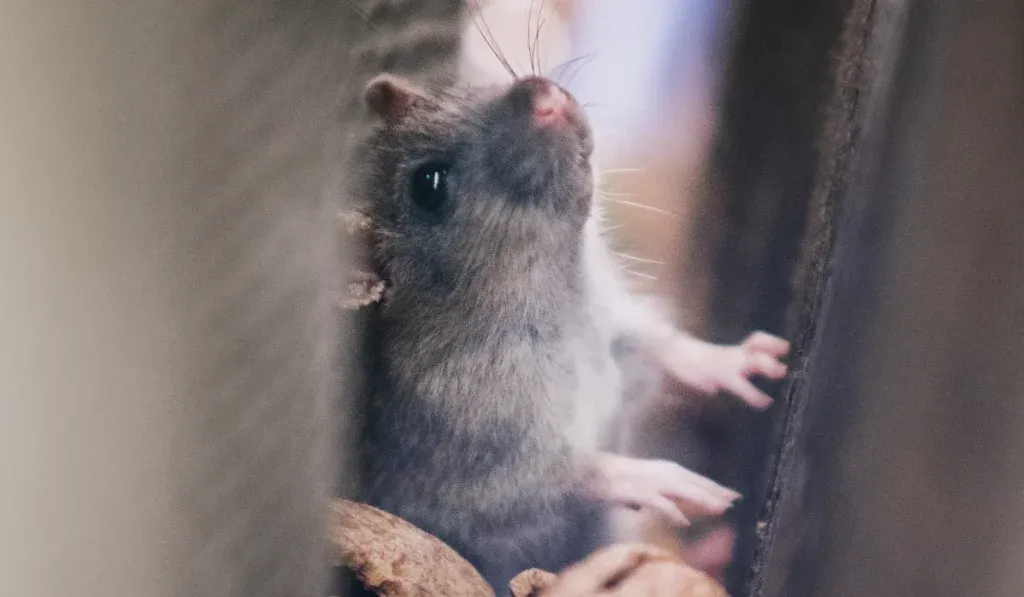
Hearing squeaking or scurrying above your ceiling tiles or drywall at night? That’s not just your imagination. Mice in the ceiling are a real problem for homeowners around the Big Horn Basin and Billings, especially during the colder months when homes become prime shelter.
If you’re the type who’d rather fix a problem yourself than pay someone to do it, many homeowners try the DIY route first. But the truth is, getting rid of mice in the ceiling isn’t a quick Saturday job. If you don’t handle it right, a mouse problem can turn into a full-on mouse infestation in no time.
Here’s how to get rid of mice in your ceiling effectively, and when it’s time to call in pest control.
Key Takeaways
- Seal entry points first: Mice often enter through tiny gaps near your roofline, siding, or utility lines. Blocking these holes is the most important step in preventing infestations.
- Use traps effectively: Snap traps baited with peanut butter are the most reliable DIY solution. Place them near signs of activity like droppings or scratching noises.
- Clean thoroughly and safely: After removing mice, disinfect and safely dispose of droppings and nesting materials to prevent health risks.
- Call in professionals if needed: If DIY methods don’t solve the problem within a week, pest control experts can provide long-term solutions and prevent future infestations.
How Do Mice Get Into Your Ceiling?

Mice don’t magically appear overhead. They usually enter through crawl spaces, basements, or small holes along your roofline or siding. These access points are often no bigger than a dime, and they’re easy to overlook until there’s activity above your ceiling.
Once inside, mice follow electrical wires and plumbing lines, using insulation for nesting material. Ceilings provide shelter, warmth, and protection, making them an ideal hideout.
To stop the problem for good, you need to find out how they’re getting in and seal those entry points right away.
Signs You Have Mice in the Ceiling
The most common sign is noise. If you hear scratching, squeaking, or running in the ceiling at night, you’re probably hearing mice. But sound isn’t the only clue.
You might also notice mouse droppings in attic spaces or near insulation. These rodent droppings are small, dark, and shaped like grains of rice. You may see evidence of chewed drywall or shredded insulation. If they’ve been there long enough, you might catch a faint musty odor or find dead mice in traps or tucked into hidden corners.
Any of these signs point to a growing rodent problem, and you’ll want to take action fast.
Start by Sealing All Entry Points
To get rid of mice, you’ve got to stop them from getting in. Sealing entry points is the first and most important step in rodent control. Look around your home’s exterior for small holes in siding, gaps around vents, or unsealed spots near utility lines.
Use steel wool to stuff the hole, then secure it with caulk. This combo works because mice can’t chew through the metal fibers, and the sealant keeps everything in place.
You’ll want to check common access points like crawl spaces, attic vents, and the foundation. Mice can squeeze through anything larger than a pencil, so be thorough.
Set Traps Where You Hear Activity
Once you’ve sealed off the ceiling, it’s time to set traps. Snap traps and traditional mouse traps are still the most effective methods. Use peanut butter as bait; it sticks better than cheese and attracts more interest.
Set traps along edges in attics or basements, near droppings, or along known travel routes. If you don’t have attic access, place traps in closets, behind appliances, or inside crawl spaces below the ceiling.
Check the traps daily and clean up carefully. If you’re using glue traps or ultrasonic repellents, keep expectations realistic. These products might help temporarily, but they’re no substitute for properly placed snap traps.
Use Natural or Commercial Repellents as Support
You can try adding a mouse repellent to discourage future visitors. Some homeowners use peppermint oil on cotton balls to create a scent barrier. Others install ultrasonic devices to irritate mice with sound waves.
These repellents can help once you’ve removed the main infestation, but they rarely work as standalone solutions. The best approach combines trapping, exclusion, and regular inspection.
Clean Up Droppings and Nesting Material Safely
Once the activity dies down, it’s time to clean up. Don’t just sweep up droppings or nesting material; this can release harmful particles into the air. Instead, spray droppings with a disinfectant, wipe them up with disposable towels, and dispose of them safely.
Clean up all signs of the infestation. Remove nesting material and check for food sources that may have attracted mice in the first place. Keep pet food in sealed containers and store dry goods in airtight bins.
Why Acting Fast Matters
Mice don’t stay put. If they’re in your ceiling, it’s only a matter of time before they make their way to your pantry, laundry room, or anywhere else they can find food and warmth.
Besides chewing on insulation and electrical wires, they can spread disease through droppings and urine. And once mice start nesting in your ceiling, they reproduce quickly. What starts as one or two can turn into a full-blown mouse infestation in weeks.
When DIY Isn’t Enough
DIY mouse control works when you catch the problem early. But if you’re still hearing scratching above your head after a week of setting traps, it’s time to consider professional pest control services.
At Kodiak Pest Control, we specialize in identifying access points, placing professional-grade bait stations, and offering exclusion services that go beyond what you can buy at the hardware store. We treat the structure and the property, eliminating mice where they live, not just where you see them.
We focus on long-term results, and we take pride in saving homeowners the time and hassle of climbing through attics or hunting down small holes with a flashlight.
What Does It Cost to Get Rid of Mice?
Our Unlimited Pest Control plan includes coverage for mice and rats, with pricing starting at $129 for your first visit and $59 per month for homes up to 4,000 sq ft. The service includes all the follow-up visits you need, with no extra fees if the mice return.
It’s a lot more affordable than replacing chewed wires or repairing water damage from torn insulation around plumbing lines.
Final Thoughts
Mice in the ceiling are more than just a noise problem; they’re a sign of bigger trouble ahead if you don’t act fast. The best way to get rid of mice is to trap what’s already inside, remove food sources, clean up droppings, and, most importantly, seal every possible entry point.
If you’re still hearing squeaking or scurrying above your head, it’s time to let someone else take it. Kodiak’s pest control experts know what to look for and how to stop infestations before they turn into a full-on rodent problem.
So if you’d rather spend your Saturday fishing, working on a project, or just relaxing, give us a call. We’ll handle the mice, you focus on what matters.




