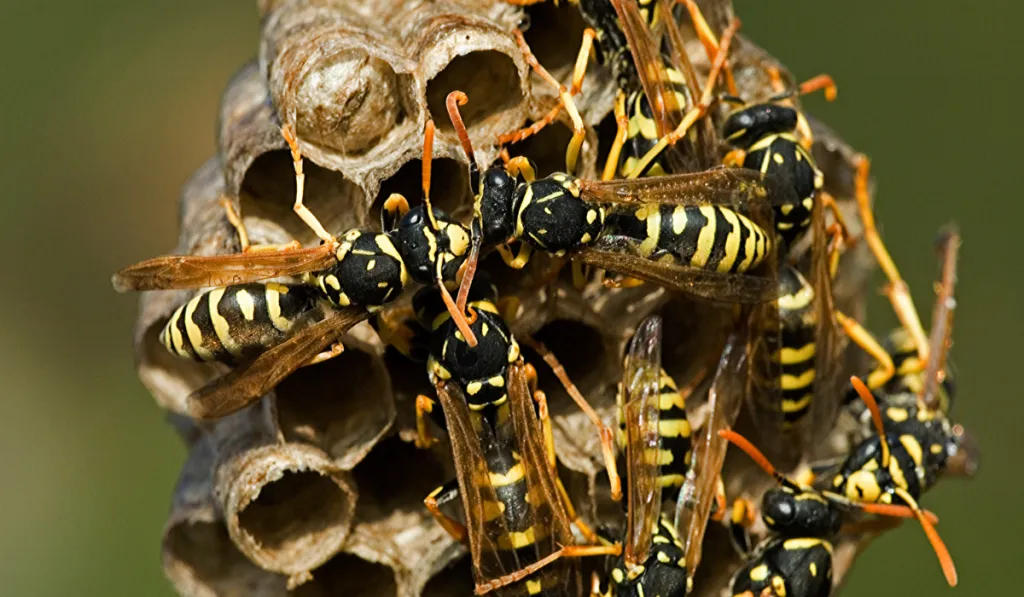
Spotting paper wasp nests under your eaves or porch roof can stop you in your tracks. One day, your entryway looks normal. Next, there’s a gray, paper-like material hanging overhead with wasps crawling across it.
In Wyoming, especially in the Big Horn Basin, paper wasps become active in spring and stay active through late summer. If you find one, you may wonder whether to try a DIY fix or call for wasp removal services right away.
This action plan outlines what to do in the first 10 minutes, how to stay safe around stinging insects, and when to call a professional residential pest control company.
Key Takeaways
- Act quickly but calmly. Avoid disturbing paper wasp nests during peak wasp activity.
- Not all stinging insects are the same. Paper wasps behave differently from yellowjackets and hornets.
- DIY methods like aerosols, dish soap, or wasp sprays carry real risk, especially near soffits or wall voids.
- Call a pest control company if the nest is large or hidden, or if anyone in the home has a history of allergic reactions to wasp stings.
Your First 10 Minutes: What to Do
Step 1: Back Away and Observe
When you first notice paper wasp nests, create distance. Paper wasps, often from the Polistes family, are social wasps and may be less aggressive than yellowjackets in some situations, though they will defend their nests if disturbed. Still, sudden movement can trigger defensive behavior.
Watch from a safe distance to identify the type of wasp. Paper wasps have long legs that dangle in flight and may show yellow markings. Yellowjackets look stockier, fly more directly, and often build nests in the ground. Hornet nests are enclosed and football-shaped.
Step 2: Identify the Nesting Site
Look at where the nest is attached. Common nesting sites for paper wasps include eaves, overhangs, soffits, fence posts, and light fixtures. In North America, European paper wasps often choose sheltered areas around homes and commercial buildings.
If you see wasp activity near wall voids or siding gaps, the problem may extend beyond the visible paper nests. Hidden nesting inside wall voids increases the risk of a larger infestation.
Step 3: Limit Access to the Area
Keep kids, pets, and tenants away from the nesting site. Close nearby windows and doors. Paper wasps hunt caterpillars and other flying insects, which makes them beneficial insects for pollination and pest reduction, but that doesn’t make them safe near high-traffic areas.
Do not swat at them. A single crushed wasp can release pheromones that attract more defensive behavior.
Step 4: Do Not Spray Immediately
It’s tempting to grab aerosols or wasp sprays from the garage. Most DIY products require you to stand close to the nest. If you miss the target or only hit a few adults, the remaining wasps can respond aggressively.
Improper use of insecticide products can push wasps deeper into cracks, soffits, or wall voids, making nest removal harder later.
Paper Wasp Nest Safety Rules
Wear Protective Clothing
If you attempt any DIY wasp control, wear protective clothing that covers your arms, legs, and face. A single wasp sting can be painful. Multiple wasp stings increase the risk, especially when large numbers are involved.
If you’ve ever experienced an allergic reaction to a stinging insect, do not attempt removal yourself. Even one sting can require emergency care.
Time It Carefully
Paper wasps are less active early in the morning or at dusk. That’s when many DIY projects take place. However, late summer colonies are larger, with more larvae and adult workers protecting the nest.
Overwintering queens may also hide in attics or sheltered areas once temperatures drop in Wyoming. Disturbing them can trigger indoor wasp activity during warm spells.
Know the Difference Between Species
Not every nest belongs to the same type of wasp. Mud dauber nests are made of mud and typically house solitary wasps. Hornets and bald-faced hornets create large enclosed hornet nests. Yellowjackets often build nests underground and are more aggressive.
Accurate identification matters. Treating yellowjackets like umbrella wasps can lead to painful mistakes.
Action Plan by Nest Location
Under Eaves and Overhangs
Paper wasp nests under eaves are common in Cody, Powell, and throughout the Basin. These exposed paper nests are easier to identify and access.
If the nest is small and early in the season, some homeowners attempt DIY removal, but you should use caution due to the risk of wasp stings. Larger nests with visible larvae require even more care. Disturbing them without proper equipment can trigger defensive swarming.
Inside Wall Voids or Siding
When wasps build nests inside wall voids, you may only see a few entering and exiting through entry points. This scenario often indicates the presence of a hidden colony.
Spraying aerosols into an opening often fails to eliminate a hidden nest and may leave the colony active. It can scatter the colony deeper into the structure. Professional pest control technicians use targeted materials and dusts designed for void spaces to safely eliminate hidden colonies.
In the Ground or Landscaping
If the nest appears near the ground, confirm you’re not dealing with yellowjackets. Yellowjackets and some ground hornets build nests underground and defend them aggressively.
When large numbers fly in and out of the ground, it often signals a serious infestation. DIY wasp traps and repellents may reduce some wasp activity, but typically do not eliminate an active nest.
Commercial Properties and High-Traffic Areas
On commercial properties, visible wasp activity near entrances can create safety concerns for customers and staff.
Quick nest removal protects customers and staff. It also prevents recurring problems since wasps often return to the same nesting site year after year.
When to Call a Pro
The Nest Is Larger Than a Softball
Large paper wasp nests mean more adult wasps and more larvae inside. Bigger colonies react faster and defend harder. If you see steady wasp activity throughout the day, it’s time for professional pest control.
You Can’t Safely Reach the Nest
Nests above second-story soffits, on steep overhangs, or near power lines should not be DIY projects. Falls and stings combined create unnecessary risk. A licensed pest control company has the equipment and training to handle elevated nest removal safely.
You See Repeated Nesting
If new nests keep appearing in the same areas each spring, you likely have favorable food sources and unsealed entry points. A broader wasp control plan can address nesting patterns, treat problem areas, and reduce repeat issues.
Anyone Has a History of Severe Reactions
If you or someone on the property has experienced an allergic reaction to a stinger, skip DIY entirely. Even generally less aggressive paper wasps can defend their colony.
Schedule Paper Wasp Nest Removal in the Big Horn Basin
Paper wasp nests may look small, but they can escalate quickly during Wyoming’s warm months. Addressing nests early can help reduce colony growth and the risk of wasp stings around your property.
At Kodiak Pest Control, we provide residential and commercial pest control throughout the Big Horn Basin and into Billings, Montana. Our technicians identify the wasp species, eliminate the colony, remove the nest when possible, and treat nearby nesting areas to reduce the likelihood of repeat activity.
Contact us today to protect your property with proactive pest control that stops wasps where they live.
FAQs
How can you tell if it’s a paper wasp nest or a hornet nest?
Paper wasp nests are open and umbrella-shaped, with visible hexagonal cells. Hornet nests are enclosed and football-shaped. Yellowjackets often build nests underground. Correct identification helps determine the safest removal method.
Are paper wasps beneficial or harmful?
Paper wasps are beneficial insects because they help with pollination and control caterpillars. However, when they build nests near doors, decks, or commercial entrances, they become a safety concern due to potential wasp stings.
Do wasp traps and repellents work?
Wasp traps can reduce the population of some flying insects, but rarely eliminate an active nest. Repellents may deter scouting wasps, but do not remove established colonies. For consistent wasp control, targeted pest control treatment is more reliable.