
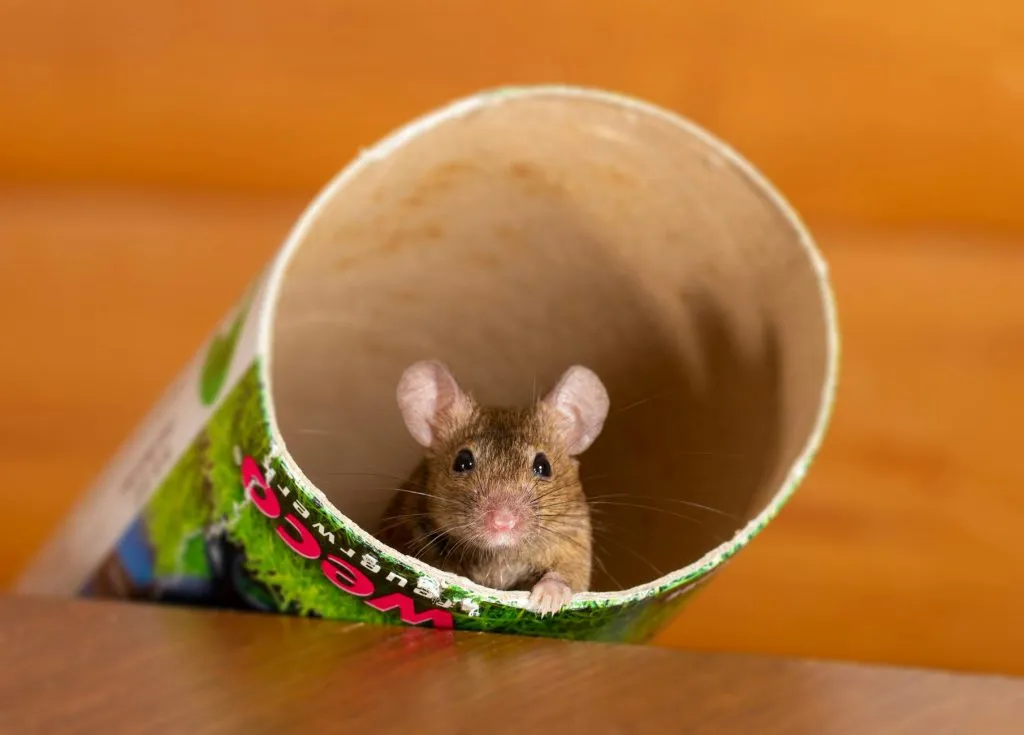
Learning how to mouse proof your home starts with understanding how rodents get inside in the first place. House mice can squeeze through surprisingly small openings around foundations, siding, vents, pipes, doors, and utility lines. Once indoors, they search for food, warmth, water, and sheltered nesting areas.
Many homeowners first notice the problem after hearing scratching in walls, finding droppings near food storage, or spotting gnaw marks around baseboards and stored items. By that point, rodents may already be traveling through hidden parts of the structure.
Mouse proofing focuses on blocking entry points, reducing attractants, and making the home less comfortable for rodents over time. Catching problems early usually makes prevention much easier.
Key Takeaways About Mouse Proofing
- House mice and other rodents often enter through small gaps around foundations, vents, pipes, and doors.
- Food, clutter, moisture, and sheltered nesting areas make homes more attractive to rodents.
- Sealing entry points and reducing attractants helps prevent recurring rodent problems.
- Professional inspections can uncover hidden access points and activity that are easy to miss.
Signs Your Home May Need Mouse Proofing
Rodents usually leave behind warning signs before homeowners actually see them. Paying attention to those clues can help you identify vulnerable areas earlier.
Droppings Near Food and Storage Areas
Mouse droppings often appear near kitchens, pantries, appliances, garages, basements, and storage boxes where rodents search for food or shelter.
If droppings keep appearing in the same areas, rodents may already be using hidden travel routes nearby. House mice tend to follow consistent paths once they settle indoors.
Gnaw Marks Around Walls and Materials
Rodents constantly chew to wear down their teeth. Gnaw marks around wood trim, cardboard, food containers, wiring, or stored belongings may point to ongoing activity.
Mice sometimes chew through softer materials near walls, utility openings, or food storage areas while searching for access to shelter and nesting spots.
Noises Inside Walls or Ceilings
Scratching or movement inside walls, ceilings, attics, or crawl spaces often becomes more noticeable at night when rodents are most active.
These hidden spaces allow mice and rats to move around the structure while staying protected from people and pets.
Where Rodents Commonly Enter Homes
Most mouse problems begin outside. Rodents typically enter through small openings that develop naturally as homes settle and materials wear down.
Gaps Around Doors and Foundations
Small openings beneath doors, around foundations, or where siding meets concrete are some of the most common rodent entry points.
According to the EPA, sealing holes and gaps with durable materials such as metal mesh or steel wool can help block rodent access.
Openings Around Pipes and Utility Lines
Pipes, vents, wiring, and utility penetrations often create small gaps that rodents use to get indoors. These openings may appear around kitchens, basements, laundry rooms, or utility spaces.
Even narrow gaps around plumbing lines can provide enough room for mice to squeeze through.
Attics, Crawl Spaces, and Roof Areas
Roof vents, attic openings, crawl spaces, and damaged soffits can all become access points for rodents. Squirrels, rats, birds, and mice often use elevated areas where they can move around unnoticed.
Attics and crawl spaces also provide quiet nesting areas with less activity from people or pets.
What Attracts Mice and Other Rodents Indoors
Rodents move inside because homes provide reliable shelter and access to food and water. Once those conditions are available, infestations can grow gradually over time.
Food Sources Left Accessible
Pet food, crumbs, bird seed, dry goods, garbage, and food left out overnight all attract rodents. Once mice discover a dependable food source, they often continue returning to the same areas.
Storing food in sealed containers and cleaning spills quickly can help reduce what attracts rodents indoors.
Cluttered Storage and Nesting Areas
Rodents prefer hidden areas where they can nest without disturbance. Cardboard boxes, paper piles, insulation, and cluttered storage spaces provide ideal cover.
Basements, garages, crawl spaces, and attics often become common nesting locations because they stay dark and undisturbed for long periods.
Moisture and Shelter Around the Home
Leaks, condensation, damp basements, and standing water can support rodent activity by providing access to moisture. Dense landscaping, wood piles, and debris near the foundation also create sheltered outdoor staging areas.
Removing excess clutter and trimming vegetation around the structure can help make the property less inviting to rodents and other animals.
How to Mouse Proof Your Home Effectively
Successful rodent proofing usually combines exclusion work, cleanup, and ongoing monitoring instead of relying on traps alone.
| Mouse Proofing Step | Why It Helps |
|---|---|
| Seal holes and gaps | Blocks rodent entry routes |
| Store food in sealed containers | Reduces food access indoors |
| Reduce clutter and piles | Limits nesting and hiding areas |
| Inspect attics and crawl spaces | Helps identify hidden activity |
| Use traps or bait strategically | Helps monitor and reduce activity |
Seal Entry Points Around the Structure
One of the most important rodent proofing steps is sealing access points before mice fully establish themselves indoors.
Pay attention to gaps around foundations, siding, doors, utility lines, crawl spaces, vents, and roof edges. Durable materials such as metal mesh, weather stripping, steel wool, and quality sealants often work best for long-term exclusion.
Reduce Indoor Food and Water Sources
Rodents stay where food and moisture remain easy to access. Cleaning crumbs, storing food properly, emptying trash regularly, and fixing leaks all help make the home less attractive.
Pet food should not be left accessible overnight, especially in garages, laundry rooms, or basements where rodents commonly travel.
Use Traps and Monitoring Carefully
Traps and bait stations can help monitor rodent activity and catch mice that are already indoors. However, traps alone usually do not solve the underlying problem if entry points remain open.
Strategic placement matters. Rodents prefer to travel along walls and hidden edges rather than crossing open spaces.
Why Rodent Problems Can Become Serious
Small rodent problems can expand quickly when nesting areas, food sources, and entry points remain untreated.
Contamination Around Food Areas
Rodents leave droppings and urine along the paths they travel. Kitchens, pantries, basements, garages, and storage rooms are common areas where contamination may build up over time.
This is one reason ongoing rodent activity should be addressed early instead of waiting for the problem to grow.
Damage to Stored Items and Materials
Mice and rats may chew through cardboard, insulation, stored belongings, and soft materials while building nests.
Mississippi State University Extension notes that rodents commonly settle into attics, garages, crawl spaces, and storage areas once they gain access indoors.
Hidden Activity Inside Structural Spaces
Rodents often hide inside walls, crawl spaces, attics, and utility voids where activity may go unnoticed for long periods.
By the time scratching sounds, droppings, or odors become obvious, the infestation may already be more established.
Professional Rodent Proofing and Mouse Control
When rodents keep returning despite DIY efforts, hidden entry points or nesting areas often remain active somewhere around the property.
Kodiak Pest Control provides rodent inspections and exclusion services throughout Wyoming and Montana. Inspections focus on locating rodent access points, identifying nesting activity, and helping homeowners reduce the conditions supporting infestations.
Treatment plans may involve sealing vulnerable areas, placing traps or bait stations strategically, and identifying environmental conditions contributing to ongoing rodent problems.
If you are dealing with recurring mice, rats, or other rodent activity, you can schedule an inspection to identify entry points and discuss treatment options.
Bottom Line on Mouse Proofing Your Home
Mouse proofing works best when homeowners focus on prevention before rodents become fully established indoors. Sealing openings, reducing food and water sources, and monitoring vulnerable areas all help lower the chances of recurring infestations.
Because mice, rats, squirrels, and other animals often use hidden spaces to travel through structures, small problems can remain unnoticed for long periods if inspections are delayed.
Regular inspections and consistent maintenance can help keep your home less attractive to rodents throughout the year.
Frequently Asked Questions About Mouse Proofing
What is the best way to mouse proof a house?
The most effective approach combines sealing entry points, reducing food and water sources, removing clutter, and monitoring for rodent activity regularly.
Can mice fit through very small gaps?
Yes. House mice can squeeze through surprisingly small openings around foundations, doors, pipes, and utility lines.
Do traps alone solve mouse problems?
Not usually. Traps may catch rodents already indoors, but open entry points often allow new mice to continue entering the home.
What areas should I inspect first for rodent entry?
Start around foundations, doors, windows, crawl spaces, attics, utility lines, vents, and areas where pipes or wiring enter the structure.
“`
Our methodology: how we research pest control topics
Every Kodiak Pest Control article follows the same standard we hold our service work to: clear, accurate, and grounded in what actually works on a real Montana or Wyoming home. Homeowners across Billings and the Big Horn Basin count on us for honest pest information they can act on, and we treat the writing the same way.
We build our content from a combination of government guidance, peer-reviewed research, and the patterns our technicians see across homes in the regions we serve. Here is how we approach each article:
Studying pest behavior
We start with how each pest actually lives — where it nests, how it spreads, and what conditions support it. The high desert and basin climates of our service area shift pest pressure across the year, and understanding pest biology in this regional context is what keeps our recommendations practical.
Reviewing health and home risks
We review research on how each pest affects human health and home structures. Some pests are a nuisance. Others trigger allergies, carry bacteria, or cause structural damage. Knowing the actual risk helps homeowners decide how urgently to act.
Using Integrated Pest Management
Our recommendations are grounded in Integrated Pest Management (IPM), the framework supported by the USDA and EPA. IPM combines monitoring, sanitation, exclusion, and targeted treatment to reduce pest populations while limiting unnecessary product use.
Prioritizing prevention and lasting protection
A pest problem rarely ends with one treatment. We focus on the conditions that allow infestations to start in the first place — moisture, food sources, gaps around the home, harborage zones — because long-term control depends on changing the environment, not just treating the symptoms.
Citing peer-reviewed and government sources
Whenever possible, we support our recommendations with peer-reviewed studies, university extension research, and guidance from agencies like the EPA, CDC, and USDA. Each source we cite is listed at the end of the article.
Why trust us
Kodiak Pest Control is owner-operated by Jacob Haslem, serving homeowners across Billings, Laurel, Billings Heights, and Lockwood in Montana, and across Cowley, Lovell, Powell, Worland, and Greybull in Wyoming. We are a regional operation that knows the pests, the climate, and the homes in our service area.
That same standard runs through our content. The information you read here reflects what our technicians see in the field, what current research supports, and what we have learned from servicing homes across the Big Horn Basin and the Yellowstone County region.
Our credentials
- Owner-operated by Jacob Haslem
- Service across Billings, Laurel, Billings Heights, Lockwood (MT) and Cowley, Lovell, Powell, Worland, Greybull (WY)
- General pest control, specialty pest services, and seasonal treatments
- Trained pest control technicians on staff
- Continuous review of research, regulations, and regional pest pressure
Sources and standards we reference
To keep our content accurate and up to date, we rely on established research and authority sources, including:
Environmental Protection Agency (EPA):
Guidelines on product use, labeling, and approved applications.
Centers for Disease Control and Prevention (CDC):
Public-health guidance on pests that affect human health, including mosquitoes, ticks, rodents, and cockroaches.
United States Department of Agriculture (USDA):
Integrated Pest Management standards and pest biology research.
National Pest Management Association (NPMA):
Industry standards, pest behavior research, and seasonal trend reporting.
Montana State University Extension and University of Wyoming Extension:
Peer-reviewed, region-specific research on pest biology and control methods relevant to Montana and Wyoming homes.
Peer-reviewed journals:
Research published in entomology, public health, and environmental science journals to support specific claims about pest behavior, health risks, and treatment efficacy.
Article sources
The following sources were specifically referenced in the research and development of this article:
All information is accurate at the time of publication and is reviewed regularly to reflect current research and pest control standards.




