
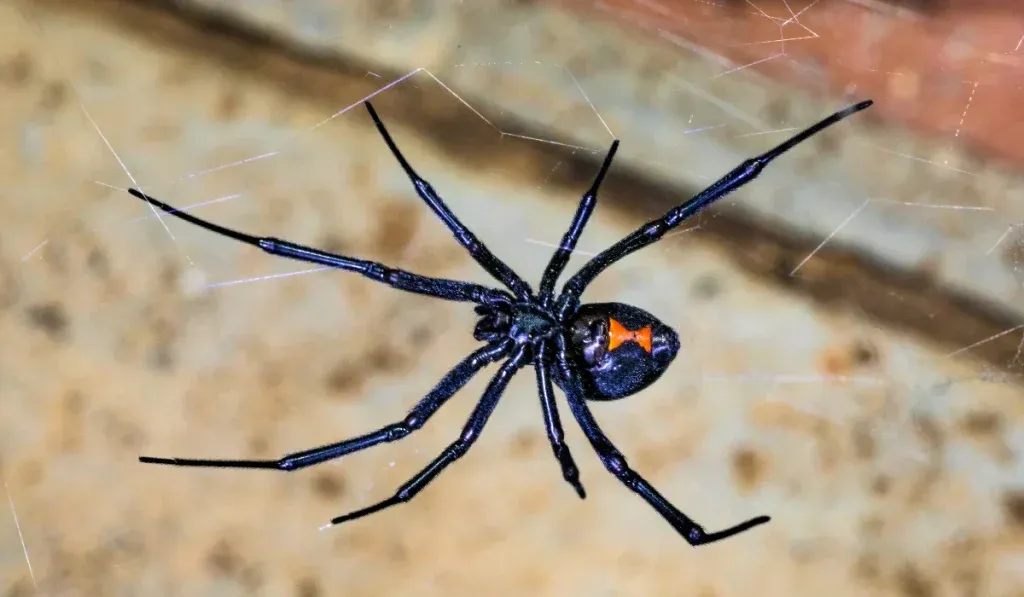
If you find a spider in your Billings-area home, garage, shed, or yard, the first question is usually whether it is dangerous. Montana spiders include web builders, active hunters, and several harmless arachnids that are often mistaken for spiders. Kodiak Pest Control commonly encounters black widows, cat-faced spiders, wolf spiders, jumping spiders, and harvestmen in its service area. Knowing the basic differences can help you identify what you are seeing, understand when caution is appropriate, and reduce the conditions that bring spiders close to your home.
Common Montana Spiders and How to Identify Them
Common Montana spiders vary considerably in shape, behavior, and where they spend their time. A spider running across the garage floor requires a different identification approach from one sitting in a web under an eave.
For Montana-specific occurrence and habitat information, the Montana Natural Heritage Program’s Montana Field Guide is a useful reference. When identifying a spider, consider several clues together instead of relying on color alone.
| Spider or Arachnid | Useful Identification Clue | Typical Behavior | Level of Concern |
|---|---|---|---|
| Black widow | Dark, rounded body; identification depends on markings and other features | Remains around irregular webs in protected sites | Greater caution warranted |
| Wolf spider | Sturdy body and active movement | Hunts on the ground rather than using a prey-catching web | Generally low |
| Cat-faced spider | Distinctive abdominal shape | Builds an orb web | Generally low |
| Jumping spider | Large forward-facing eyes | Actively stalks prey and moves in short bursts | Generally low |
| Harvestman | Long legs and a body that appears broadly joined | Walks rather than using a spider web | Not a true spider |
Black Widow Spiders
Black widows deserve more attention than most spiders you encounter around a Montana property. Kodiak includes black widows among the spiders it commonly handles in its regional pest-control work.
Do not identify a black widow simply because a spider is black. Body shape, markings, web characteristics, and location all matter. If you find a suspected widow around stored materials, a garage, a shed, or another protected space, avoid picking it up or reaching blindly into the web.
Black widow bites can be medically significant. If a suspected bite causes concerning symptoms, seek medical care rather than trying to identify the spider from the appearance of the skin alone.
Wolf Spiders
Wolf spiders are active hunters. They pursue prey rather than depending on a prey-catching web, which helps explain why you may see one moving across a garage floor, basement, patio, or other ground-level surface.
Their quick movement and relatively sturdy appearance can make them seem more threatening than a spider sitting quietly in a web. Movement is actually one of the better clues for narrowing down an identification. A fast-moving ground hunter behaves quite differently from a black widow associated with an irregular web.
If you are unsure whether you have found a wolf spider, consider its movement, body shape, location, and whether a prey-catching web is present before making a guess.
Cat-Faced Spiders
Cat-faced spiders are another type Kodiak reports encountering in its service area. They are orb-weavers, so the shape and placement of the web can be useful when you are trying to identify one.
Their abdomen has a distinctive form that gives the spider its common name. That unusual appearance can make the spider seem alarming at first, but appearance alone does not indicate medical risk.
A cat-faced spider found outdoors in an orb web should therefore be evaluated differently from a dark spider hiding in an irregular web inside a sheltered storage area.
Jumping Spiders
Jumping spiders hunt actively instead of waiting in a large prey-catching web. You may find them moving across siding, walls, windows, fences, or other surfaces where they can pursue small prey.
Their prominent forward-facing eyes and short, deliberate movements are useful identification clues. Because they sometimes turn toward movement and appear to watch what is nearby, homeowners may interpret their behavior as aggressive. Their hunting style is a more useful explanation.
When comparing types of spiders in Montana, behavior can often narrow down the possibilities before color does.
Daddy Long Legs and Harvestmen
“Daddy long legs” is a common name that can cause confusion. Kodiak’s service information uses the term for harvestmen, which are arachnids but are not true spiders.
One visible difference is body structure. A spider has two main body regions, while a harvestman’s body appears more broadly joined together. Harvestmen also should not be grouped with spiders simply because both have eight legs.
That distinction matters when you are searching for Montana spider identification information. Correctly recognizing a harvestman can prevent an unnecessary concern about a creature that is not actually a spider.
Which Montana Spiders Deserve More Caution?
Searches for dangerous spiders in Montana or poisonous spiders in Montana usually come from the same concern: whether a spider found around the home could hurt someone.
“Venomous” is the correct term when discussing an animal that delivers venom through a bite. The fact that a spider uses venom to subdue prey, however, does not mean every species presents the same degree of medical concern to people.
Among the spiders covered here, black widows deserve the greatest caution. The CDC/NIOSH venomous spider resources provide public-health information related to medically significant spider exposure.
If you believe you were bitten and develop symptoms that concern you, contact an appropriate medical professional. A skin mark by itself is not a reliable way for a homeowner to identify which spider caused it.
Are Black Widows Found in Montana?
Yes. Kodiak Pest Control identifies black widows among the spiders commonly encountered and covered within its regional service area. That makes black widow awareness useful for homeowners in Montana, including the Billings area.
When you find a suspected widow in a frequently used space, avoid direct handling. Pay attention to where the spider was located and whether you are seeing repeated activity in the same area.
A professional inspection can then look beyond the individual spider and check nearby protected spaces, entry points, and other areas that may support recurring activity.
What About Brown Recluse Spiders?
A brown spider should not automatically be identified as a brown recluse. Many spiders share brown coloration, so color alone is not enough for a reliable identification.
Geographic distribution also matters when evaluating a suspected brown recluse. UC Riverside’s spider research resources include information about spider identification and brown recluse distribution, making them a more appropriate reference than comparing your spider with a random image online.
If you find a spider that concerns you, take a clear photograph from a safe distance when practical. Avoid presenting an uncertain identification as fact until distinguishing features and geographic information support it.
Why Montana Spiders Show Up Around Homes
Spiders found indoors often point to conditions around the structure as much as conditions inside it. Homes provide cracks, sheltered corners, storage areas, and other spaces that can protect spiders from weather and disturbance. Other small arthropods around the property also provide prey.
That is why an inspection should include more than the room where you saw the spider. Kodiak’s general service process evaluates potential entry points, harborage areas, exterior penetrations, window and door frames, eaves, decks, landscaping edges, shrubs, trees, fences, sheds, and other structures within the service area.
Seasonal Shelter Matters
Cold Montana weather does not mean every spider on a property simply disappears. Different species survive unfavorable seasons in different ways, and sheltered locations around structures can offer protection.
Kodiak’s service information specifically notes spiders among pests that may spend winter in protected areas and become active when temperatures rise. Around a house, those protected spaces can include structural gaps and other undisturbed locations.
The useful takeaway is not that every winter spider has “moved indoors because it is cold.” It is that repeated activity near the same structural feature may point to a sheltered site worth inspecting.
How to Keep Montana Spiders Out of Your Home
Reducing Montana spiders around your home works best when you address both access and habitat. Removing one visible spider may solve the immediate problem, but it does not correct an opening or sheltered site that keeps allowing activity to return.
Seal Likely Entry Points
Inspect areas where the exterior of the house has gaps or penetrations. Give particular attention to:
- Door and window frames
- Utility and exterior penetrations
- Cracks and gaps near the foundation
- Garage-door edges
- Openings around siding and trim
The goal is straightforward: reduce the number of routes wandering spiders and other pests can use to enter the structure.
Reduce Sheltered Areas Near the House
Look for clutter, stored materials, weeds, and unnecessary debris immediately next to the structure. Garages and sheds also deserve attention because stored items can create quiet spaces that are rarely disturbed.
You do not need to strip your yard bare. Focus instead on obvious harborage areas and recurring activity near doors, windows, foundations, and outdoor structures.
Remove and Monitor Webs
Web removal does more than improve appearance. It can help you see where web-building spiders repeatedly return.
Kodiak’s standard service process includes de-webbing structures such as the house, fence, shed, and other areas within the service zone. If a web keeps reappearing beneath the same eave or beside the same doorway, that location deserves a closer inspection.
Pay Attention to the Surrounding Pest Activity
Spiders are predators, so reducing other pest activity around the structure can make the area less favorable for them. This is one reason Kodiak’s approach extends beyond a narrow strip around the foundation and considers landscaping, borders, fences, shrubs, trees, and outdoor structures.
Looking at the whole outdoor living area can reveal conditions you would miss by focusing only on the room where a spider appeared.
When to Get Professional Help With Montana Spiders
Seeing an occasional spider does not necessarily mean you need professional service. Repeated sightings, suspected black widows, recurring webs in high-use areas, or activity in spaces that are difficult to inspect safely are stronger reasons to bring in a professional.
A useful spider inspection should answer two questions: what spider is present, and why is it showing up there? Entry points, protected spaces, other pest activity, landscaping, sheds, garages, and exterior structures can all contribute to the answer.
Kodiak Pest Control has 24 years of combined experience protecting homes in Wyoming and Montana. If Montana spiders keep appearing around your Billings-area property, you can learn more about Kodiak Pest Control’s approach to local pest problems or contact Kodiak Pest Control to discuss recurring spider activity and the conditions around your home.




