
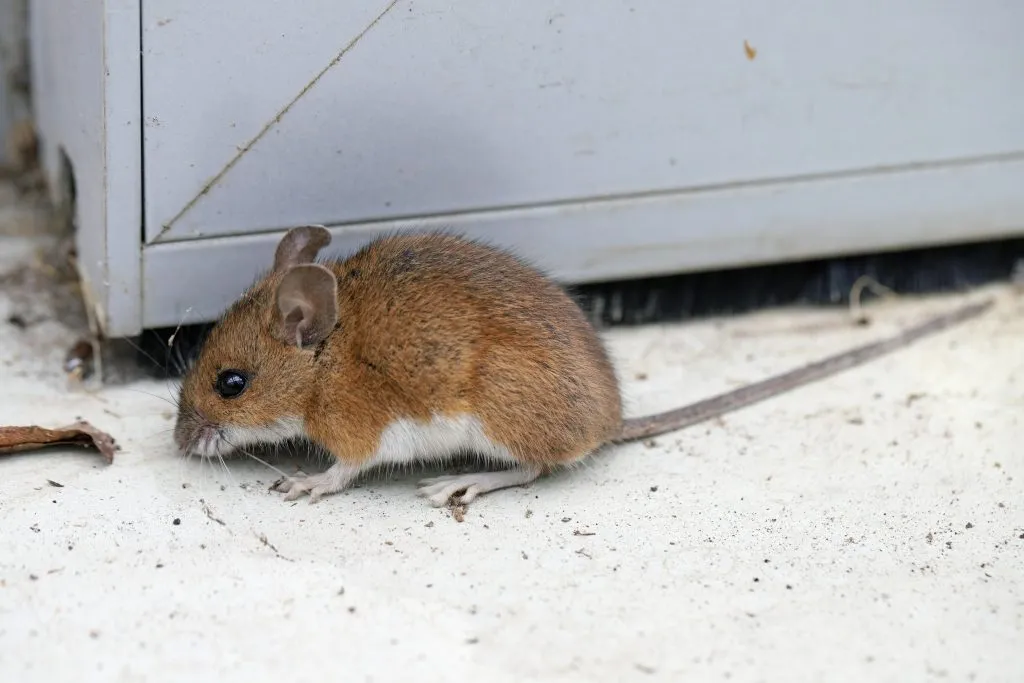
Mouse exclusion is the most reliable way to keep mice out of your Worland home this fall. Traps and bait stations remove mice already inside, but exclusion stops them from getting in at all. In the Big Horn Basin, where Worland sits surrounded by open fields, agricultural land, and sagebrush, house mice and deer mice have a short commute to your foundation as temperatures drop. Sealing the entry points they use before the migration starts is the difference between a one-afternoon job and weeks of trapping an established indoor colony.
Key Takeaways
- House mice can squeeze through any opening larger than a quarter inch. Deer mice, common around Worland’s rural edges, require the same attention to small gaps and structural penetrations.
- The most vulnerable entry points are gaps around utility lines, weep holes in brick veneer, the sill plate-to-foundation seam, and damaged door sweeps. These are where exclusion work produces the biggest return.
- Fall is the right time to seal. Mice begin moving toward structures in September and October as fields are harvested and temperatures drop. Exclusion done before that migration is substantially easier than managing an active infestation.
What to Do Before Sealing
Exclusion done before confirming whether mice are already inside can trap individuals within the wall system. Inspect for signs of active mouse presence before sealing any entry points.
Check for Active Infestation First
Droppings are the most reliable indicator. Fresh mouse droppings are dark, moist, and soft. Old droppings are gray, dry, and hard. Finding fresh droppings near the foundation, in the garage, in crawl spaces, or in the attic indicates mice are already present and exclusion work should be combined with trapping to remove them.
Other signs include gnaw marks on structural wood or food packaging, shredded insulation or fabric used as nesting material, and greasy rub marks along wall edges where mice travel repeatedly.
Set Traps First If Activity Is Present
If signs of active infestation are present, place snap traps in the areas showing activity for one to two weeks before completing exclusion. This reduces the indoor population before sealing closes the exit routes. Trapping and exclusion done in sequence produces the best outcome.
Where Mice Get Into Worland Homes
Exclusion starts with knowing where mice actually enter. Mice consistently use a predictable set of structural vulnerabilities that are easy to miss during a casual inspection.
Foundation and Sill Plate
The seam where the sill plate sits on top of the foundation is one of the most common mouse entry points in older Worland homes. Over time, this connection settles and gaps open, particularly on the side of the structure facing prevailing wind or where ground moisture has caused wood movement. The Wildlife Damage Management Extension confirms that mice can enter through any opening larger than a quarter inch. The gap between the sill plate and foundation often exceeds that in homes built more than 20 years ago.
Gaps around where the foundation meets brick veneer, particularly weep holes left open for drainage, are another consistent entry route. These sit at ground level, directly in the path mice travel along the foundation perimeter.
Utility Penetrations
Every point where a pipe, wire, cable, or HVAC line enters the structure is a potential mouse entry point. Mice follow these lines because they provide a guided path from the exterior into wall voids. Common locations include the dryer vent, HVAC refrigerant lines, water supply lines at the foundation, electrical conduit, and cable or internet lines entering near the roofline or through the sill.
Even when original installation was tight, the surrounding material often shrinks, cracks, or settles over time. In Worland’s temperature range, expansion and contraction cycles accelerate this process.
Doors and Garage
Worn door sweeps on exterior doors leave gaps that mice use consistently. A door sweep that was effective when installed often degrades within a few years, particularly on the garage entry door and back doors that see heavy use. The bottom corners of garage doors, where the rubber seal meets the concrete threshold at an angle, are a specific vulnerability.
Overhead garage doors are a commonly overlooked entry point. The side gaps and the gap at the bottom center of an overhead door can allow mice to enter even when the door appears fully closed.
Vents and Attic Access Points
Foundation vents, soffit vents, and gable vents are potential entry routes if the screening is damaged, missing, or has openings large enough for mice. Dryer and bathroom exhaust vents that lack functional back-draft dampers, or have damaged covers, are also documented mouse entry points. In the Big Horn Basin’s wind environment, vent covers take considerable seasonal stress and should be checked annually.
How to Do Mouse Exclusion: Materials and Methods
Not all exclusion materials work the same way. The key distinction is gnaw resistance: mice can chew through foam, standard caulk, and soft plastics. Every seal in a high-risk area needs a hard component.
Steel Wool and Hardware Cloth
Steel wool packed tightly into gaps is an effective temporary or supplemental measure, particularly around pipe penetrations and in tight spaces. Wildlife Damage Management Extension recommends steel wool or copper gauze as temporary plugs and specifies hardware cloth for longer-term applications. For mouse exclusion, use quarter-inch mesh hardware cloth: half-inch mesh is too large to reliably exclude mice.
Hardware cloth cut to fit over vent openings and secured at the edges prevents both mice and other small wildlife from entering. In areas subject to gnawing, hardware cloth backed with a fast-drying patching compound provides a more durable seal.
Caulk and Expanding Foam
Silicone caulk handles small gaps around window frames, utility penetrations, and the foundation-to-sill seam effectively. For larger gaps, expanding foam fills the void, but mice can chew through foam alone. Use foam as a fill material combined with a hard cover, such as hardware cloth or metal flashing, rather than as a standalone seal in areas mice are actively testing.
Metal Flashing and Sheet Metal
Galvanized sheet metal, 24 gauge or heavier, provides a gnaw-resistant barrier for areas where mice have established travel routes. The sill plate area, door thresholds, and the base of garage doors are locations where metal kick plates or flashing add durable protection mice cannot chew through.
Door Sweeps and Weatherstripping
Replace worn door sweeps with quality replacements rated for exterior use. The sweep should contact the threshold fully across the entire door width with no light visible underneath. Automatic door bottoms, which retract when the door opens and seal against the threshold when closed, provide the most reliable seal for frequently used exterior doors.
Why Fall Is the Right Time for Exclusion in Worland
Worland’s agricultural setting creates a specific fall mouse pressure pattern that makes timing important.
The Harvest Migration
As field crops are harvested in September and October across the Big Horn Basin, the cover and food that sustained large field mouse populations through summer disappears. Mice that lived in crop fields, hay bales, and sagebrush areas move toward structures in significant numbers. Homes and outbuildings at the edge of fields, near irrigation canals, or adjacent to unharvested grassland are at the highest risk during this period.
Temperature and Shelter Seeking
Worland’s fall temperature drops are significant. Nighttime temperatures can fall below freezing in October, creating strong pressure for mice to find sheltered, warm environments. Exclusion completed in August or early September, before the migration peaks, intercepts mice before they’ve established indoor entry routes.
Rural Property Factors
Worland properties with outbuildings, hay storage, livestock areas, or grain storage nearby maintain elevated mouse populations close to the home year-round. The Big Horn Basin’s open terrain gives mice less natural predator pressure than more densely settled areas, which allows outdoor populations to grow larger before fall migration begins.
When to Call a Professional
DIY exclusion handles a significant portion of mouse entry points, but a thorough professional inspection identifies gaps that aren’t visible without moving insulation, checking crawl spaces, or examining roof and attic penetrations from inside. Mice that have already established indoor travel routes also tend to find new entry points quickly when existing ones are sealed without simultaneous trapping.
Kodiak Pest Control handles rodent exclusion across Worland and the Big Horn Basin with an approach built for agricultural properties: full perimeter inspection, exclusion at identified entry points, tamper-resistant bait stations that are livestock- and pet-safe, and follow-up visits to confirm the problem is resolved. Quality Pro certified. Pest-free guarantee on covered pests.
Get Mouse Exclusion Done Before the Cold Hits
Worland’s fall migration starts in September. Kodiak’s technicians can inspect your foundation perimeter, utility penetrations, and structural gaps before mice establish indoor routes for the season. Locally owned. Quality Pro certified. Same-day service available.
Contact Kodiak Pest Control to schedule a rodent inspection in Worland.
Frequently Asked Questions
How small a gap can a mouse fit through?
House mice can squeeze through any opening larger than a quarter inch, roughly the diameter of a pencil eraser. Gaps that appear insignificant around pipes, cables, and weatherstripping are fully usable as entry points. Deer mice, common around Worland’s rural edges, have similar capabilities.
What materials actually stop mice from chewing through?
Mice can chew through wood, soft plastics, foam, and standard caulk. Materials they cannot chew through include galvanized steel, copper mesh, concrete, and brick. For any gap where mice are actively testing entry, the seal needs to include a gnaw-resistant material, not foam or caulk alone.
Should I seal the holes before or after trapping?
Trap first if signs of active infestation are present. Sealing before the indoor population is reduced traps mice inside and forces them to gnaw new entry points or die inside the wall, both of which create additional problems. Exclusion works best as the final step after trapping has reduced indoor activity.
Does mouse exclusion need to be redone every year?
Annual inspection keeps exclusion work effective. Material degradation, settling, and new construction can open gaps that were previously sealed. An annual inspection in late summer, before the fall migration, identifies new vulnerabilities before they’re used.




