
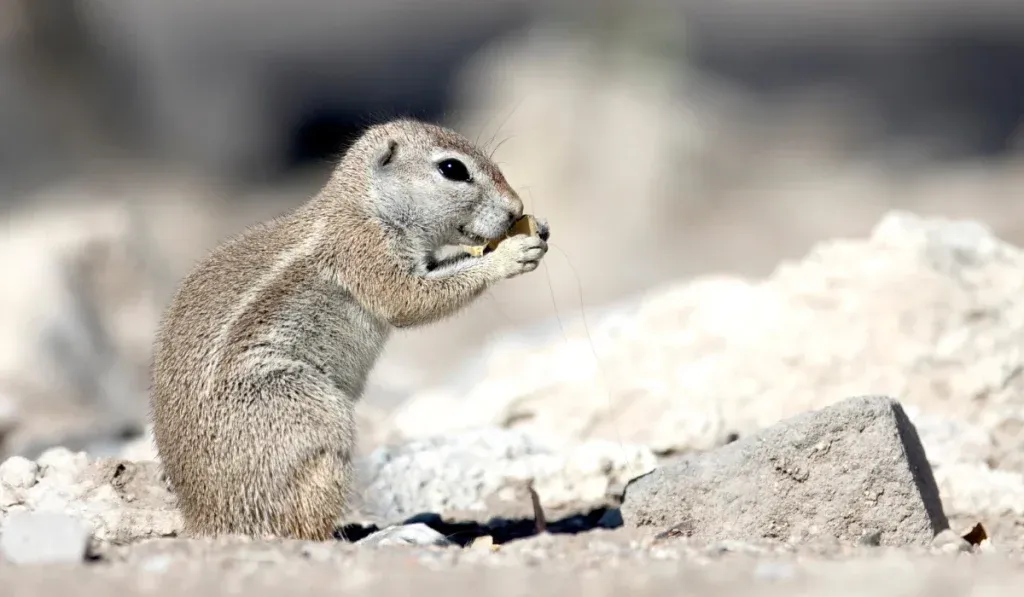
If a small burrowing rodent keeps appearing near your lawn, pasture, ditch bank, or landscaped area, it may be a Wyoming ground squirrel. Correct identification matters because ground squirrels, pocket gophers, prairie dogs, and other burrowing rodents can leave similar signs but behave differently and may call for different management decisions. This guide explains how to recognize a Wyoming ground squirrel, what to look for around burrows, how it differs from other common burrowing rodents, and what to do when activity begins affecting your property.
What Is a Wyoming Ground Squirrel?
The Wyoming ground squirrel is a member of the squirrel family, Sciuridae. Its scientific name is Urocitellus elegans, according to the Integrated Taxonomic Information System.
That scientific name is useful when researching the animal because common names can create confusion. The Wyoming ground squirrel is a different species from the Uinta ground squirrel, Urocitellus armatus, even though both are ground-dwelling squirrels found in the western United States.
Unlike tree squirrels, ground squirrels spend much of their active time on or near the ground and use underground burrows as shelter. You may see one feeding, watching its surroundings near a burrow entrance, or moving quickly across an open area before disappearing underground.
How to Identify a Wyoming Ground Squirrel
Do not identify a Wyoming ground squirrel based on a hole alone. Several animals dig or occupy burrows, and an opening can remain after the animal that created it has moved on.
Instead, combine what you see above ground with what is happening around the burrow. Useful clues include:
- The appearance and posture of the animal
- Whether it is regularly visible above ground
- The location and number of burrow openings
- Fresh digging or disturbed soil
- Repeated activity in the same part of the property
If you can observe the animal safely, take a clear photo from a distance. Photos of the animal, burrow openings, and surrounding soil can give a wildlife or pest professional more useful information than a description of a hole by itself.
Where Wyoming Ground Squirrels Spend Their Time
Wyoming ground squirrels are associated with open ground where they can move between burrows and above-ground feeding areas. That can bring them into view around open fields, grassland, pasture edges, and other areas with suitable soil and vegetation.
On a residential or rural property, you may notice an animal along the transition between maintained and less-developed ground. A pasture margin, lawn edge, ditch bank, or open landscaped area can make activity easier to spot because there is less cover blocking your view.
Ground squirrels use underground burrows as an important part of their daily lives. The burrow provides a protected place below the surface, while above-ground activity gives you some of the best opportunities to identify which animal is present.
Seasonal Activity Can Change What You See
Wyoming ground squirrels follow a seasonal activity cycle that includes hibernation. As a result, activity above ground is not consistent throughout the year.
Avoid treating a quiet period as proof that every burrow has been abandoned. If you are monitoring an area, look for a combination of fresh digging, reopened entrances, repeated sightings, and new disturbance rather than drawing conclusions from a single day.
This is particularly useful on larger Wyoming properties where you may not see every active area at once. Checking the same locations over time can help separate an old hole from an area that is still being used.
Wyoming Ground Squirrel Burrows and Signs Around Your Property
Burrows are often the first reason a homeowner starts looking for information about Wyoming ground squirrels. You may find an opening in a previously smooth section of lawn, disturbed soil near a pasture edge, or several areas that appear to have been dug recently.
The presence of a burrow does not automatically mean you have a ground squirrel problem. Old burrows can remain visible, and other burrowing animals may create signs that look similar at first glance.
Signs Worth Monitoring
Look at the entire area instead of focusing on one opening. Signs that deserve a closer look include repeated animal sightings, fresh soil disturbance, regularly used entrances, or burrowing that continues to spread through an area you maintain.
Where the activity occurs also matters. A burrow at the far edge of unused acreage presents a different concern from repeated digging through a lawn, garden, walkway edge, pasture access area, or other part of the property that you use regularly.
Avoid reaching into burrows or attempting to handle wild rodents. If you encounter a sick or dead wild animal and are uncertain about safe handling, contact the appropriate wildlife or public health authority for guidance.
Wyoming Ground Squirrel vs. Gopher or Prairie Dog
Ground squirrels are easy to confuse with other burrowing rodents because homeowners often discover the digging before they get a good look at the animal. Pocket gophers and prairie dogs are two of the most useful comparisons to make.
A pocket gopher spends most of its time underground, so soil disturbance may be much easier to notice than the animal itself. Ground squirrels are more regularly visible above ground. Prairie dogs are also commonly seen above ground, which means visibility alone is not enough to distinguish a prairie dog from a ground squirrel.
| Animal | Typical Visibility | Useful Identification Clue |
|---|---|---|
| Wyoming ground squirrel | Regularly seen above ground | Watch the animal as well as the burrow area |
| Pocket gopher | Usually remains underground | Soil disturbance may be more obvious than sightings |
| Prairie dog | Regularly seen above ground | Observe the animal and the broader burrow area |
The practical lesson is simple: do not base a control decision on the assumption that every yard hole belongs to a gopher. Correct identification can save time and help prevent the use of an approach meant for a different animal.
Why Correct Identification Matters
Different burrowing rodents use property in different ways. A gopher problem centered below the soil is not the same as visible ground-squirrel activity around open burrows, and neither should automatically be treated as a prairie dog problem.
Before deciding what to do, document what you are seeing. Note whether the animal is visible, where the openings occur, whether fresh digging is continuing, and how much of the property is affected. Those observations make a professional identification more useful.
When Wyoming Ground Squirrels Become a Property Concern
Seeing a Wyoming ground squirrel does not automatically mean control is necessary. Native wildlife can use a portion of a rural or residential property without interfering with how you use the space.
The issue becomes more practical when burrowing repeatedly affects a maintained area. If new openings or soil disturbance begin appearing in lawns, gardens, landscaped areas, pasture access points, or other frequently used spaces, it makes sense to assess the extent of the activity.
Focus on the effect on the property rather than the simple presence of an animal. Ask whether the activity is staying in one out-of-the-way location or continuing to spread into areas you need to mow, irrigate, maintain, or walk through.
That distinction helps avoid unnecessary action while still giving you a clear point at which to seek help. On acreage in the Big Horn Basin, where maintained property can sit next to open ground, understanding exactly where the activity is occurring is especially useful.
What to Do About Wyoming Ground Squirrels
If you are considering ground squirrel control, start with identification and a property assessment rather than immediately choosing a treatment method.
1. Confirm What Animal Is Present
Try to observe the animal itself and document the burrow area. A clear identification should come before any attempt to manage the problem.
2. Determine How Much of the Property Is Affected
Check whether the activity is isolated or occurring in several locations. Note whether it affects a lawn, garden, pasture, irrigation area, or another section of the property you actively maintain.
3. Check Current Wildlife Rules Before Taking Action
Rules and allowed management methods can change. Before using traps, baits, fumigants, or another wildlife-control method, consult the Wyoming Game and Fish Department for current state wildlife information and applicable regulations.
This step is especially important because identifying an animal incorrectly can also lead you to follow guidance intended for a different species.
4. Use Species-Appropriate Management Guidance
For broader information about wildlife conflicts on homes, agricultural land, and other managed property, USDA APHIS Wildlife Services provides wildlife damage-management resources.
Avoid copying a technique simply because it is labeled for “ground squirrels” in a general article. The species, location, property conditions, and current rules should all be considered before you choose an approach.
Handling Burrowing Rodent Problems on Wyoming Property
The most useful thing you can do when you find new holes or soil disturbance is identify the animal before treating the problem. A Wyoming ground squirrel, pocket gopher, prairie dog, and other burrowing rodents can occupy similar-looking areas, but they are not interchangeable.
If activity is affecting a maintained part of your property, document the locations, watch for above-ground movement, and note whether new digging continues. Those details can help determine whether you are dealing with a ground squirrel or one of the turf rodents more commonly handled through pest-control services.
Kodiak Pest Control works with property owners in the Big Horn Basin on pest and turf rodent concerns, including documented services for gophers and voles. If you are unsure what is digging on your property, you can contact the Kodiak Pest Control team to describe the activity and determine whether the problem falls within the services Kodiak provides.




