
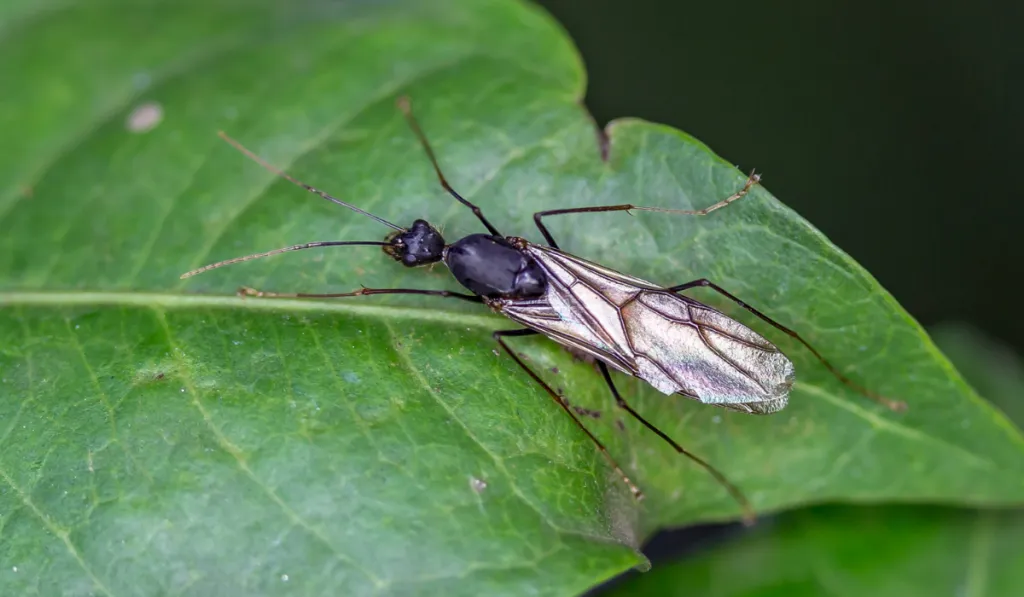
If you’ve noticed flying ants in your Wyoming home or yard, you’re not alone. These winged insects are common in the warmer months, especially after periods of high humidity. While they might look alarming, understanding what flying ants are, why they appear, and how to handle them can help keep your home and property pest-free.
Key Takeaways
- Flying ants swarm to mate and start new colonies, and their presence often signals a nearby or indoor ant infestation.
- You can manage flying ants by sealing entry points, cleaning food sources, reducing humidity, and using effective ant baits.
- Professional pest control services provide expert solutions to eliminate flying ants and prevent future infestations.
What Are Flying Ants?
Flying ants, also known as alates, are the reproductive members of an ant colony. These mature ants, including male and female ants, are responsible for creating new colonies. They’re typically seen during their nuptial flight, when they swarm in search of mates.
Here’s how you can quickly identify flying ants:
| Features | Description |
|---|---|
| Antennae | Distinct elbowed antennae |
| Wings | Front wings are longer than their hind wings |
| Thorax and Body | Pinched waist and a three-segmented body |
Flying ants are often confused with flying termites, but termites have straight antennae, equal-sized wings, and a uniform body shape.
Why Are Flying Ants Swarming?
Swarming occurs at specific times of the year, often on warm, humid days.
During this time, large numbers of winged ants emerge from their colonies to mate and start new ones. These swarms are triggered by environmental cues, such as high humidity or rainfall, which provide ideal conditions for reproduction.
While swarms are a natural part of an ant’s life cycle, seeing large numbers of flying ants can indicate a nearby ant colony. In some cases, swarms inside your home suggest ants have established a colony indoors.
Are Flying Ants a Cause for Concern?
Flying ants are not always harmful, but their presence can signal an ant infestation.
Certain species of ants, like carpenter ants, can cause significant damage to wooden structures by hollowing them out to build their nests. Unlike termites, carpenter ants don’t eat wood, but their nesting habits can weaken structural integrity over time.
If you see swarmers or flying insects frequently, it’s essential to locate the colony to determine if it poses a risk to your property.
How to Get Rid of Flying Ants
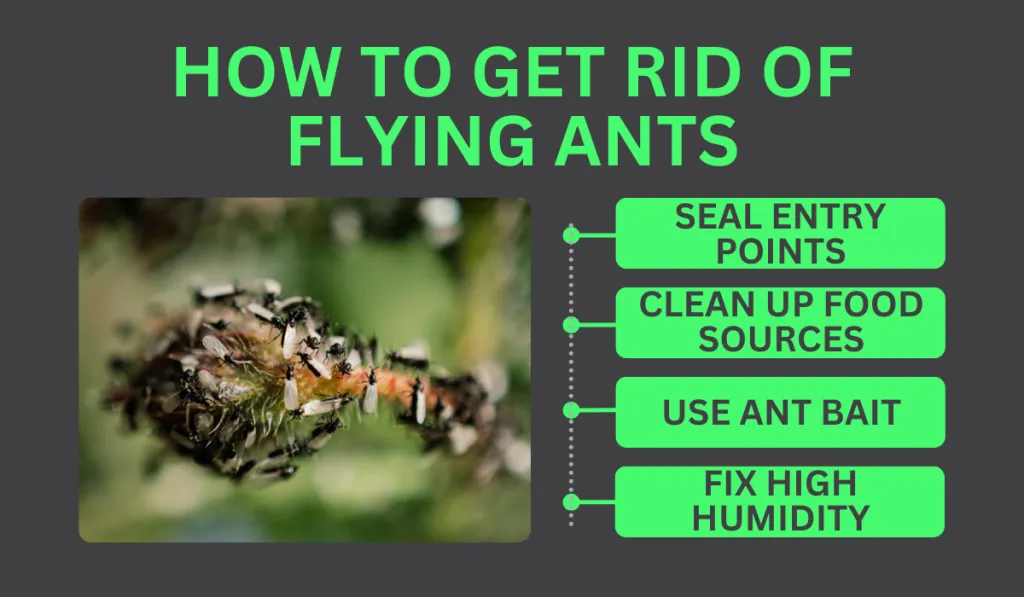
For homeowners who prefer a hands-on approach, these steps can help address flying ants and get rid of them effectively:
- Seal Entry Points: Use caulk to close gaps, cracks, and crevices around windows, doors, and other potential entry points.
- Clean Up Food Sources: Ants are drawn to food. Keep counters clean, store food in sealed containers, and take out the trash regularly.
- Use Ant Bait: EPA-approved baits are an effective way to target the entire ant colony. Worker ants bring the bait back to the nest, killing the queen and other ants over time.
- Fix High Humidity: Use dehumidifiers in basements and attics to reduce moisture levels that attract ants.
Why Are Professional Services Better?
A professional exterminator brings expertise and advanced solutions to eliminate flying ants and prevent future infestations.
Here’s what an ant control service can offer:
- Thorough Inspections: Professionals identify ant species and nesting sites, whether in walls, attics, or outdoor areas.
- Safe and Effective Treatments: Professional treatments are designed to be safe for your family and get rid of ants.
- Preventative Measures: Experts provide tips and solutions to keep your home ant-free, such as identifying and fixing moisture issues that attract ants.
Need Help With Flying Ants?
Flying ants are a natural part of an ant colony’s reproduction but can become a nuisance or even a threat if left unchecked.
Whether you’re dealing with carpenter ants, fire ants, or another species, it’s important to take action to protect your home. Use DIY methods for small problems, but don’t hesitate to contact a professional pest control service for larger infestations.
At Kodiak Pest Control, we’re here to take the hassle off your plate. Our team knows how to pinpoint the ant problem, address it effectively, and keep ants from coming back. Contact us today, and let’s keep your home pest-free!




