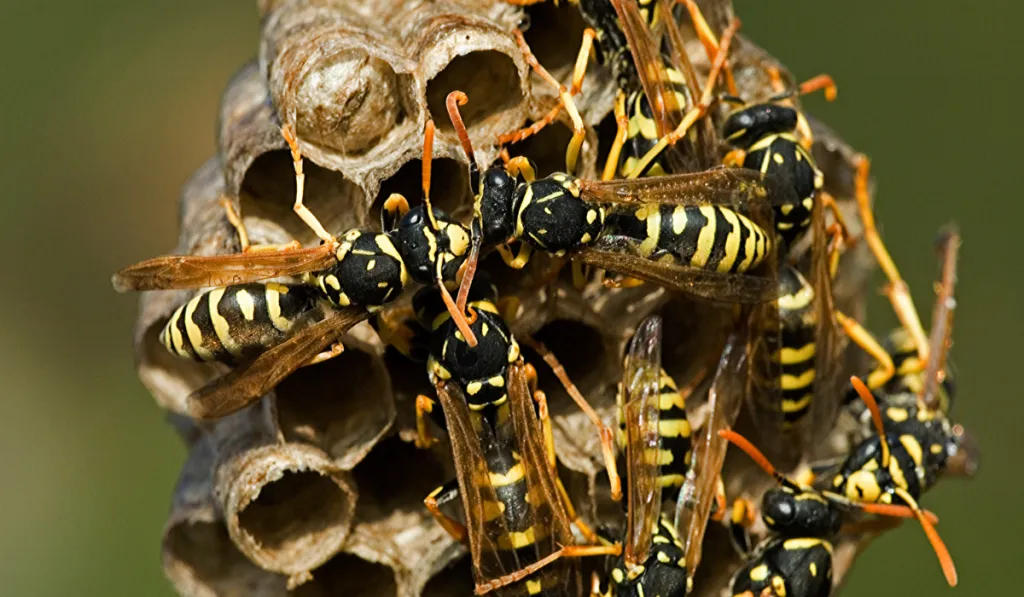
When the colder months settle over the Big Horn Basin, most of the buzzing fades away. That’s because wasps don’t fare well once temperatures drop.
So, where do they go in the winter?
The short answer is: it depends on their role in the wasp colony. Most die off as part of the natural life cycle. But not all wasps die. New queens, already mated in late summer, enter a dormant state called diapause.
To survive, these stinging insects hunker down in sheltered places that offer insulation and safety. Let’s explore those winter hiding spots.
Key Takeaways
- Queen wasps spend winter in quiet, hidden places like tree bark, wall voids, and building crevices.
- Most wasps die during cold months, but new queens survive and prepare to start new colonies in spring.
- Hidden wasps can stay near homes, so checking for nests and sealing gaps helps stop future infestations.
- Professional pest control can treat overwintering wasp spots before warm weather brings them back.
Under the Tree Bark
Out in Greybull or around the outskirts of Billings, tree bark makes for a surprisingly effective overwintering shelter. When queen wasps crawl under loose bark or into hollowed-out logs, they find a dry, stable space that helps them hibernate through the winter months.
Because predators avoid these spots in cold weather, they are more likely to survive and lay eggs when spring returns.
Inside Wall Voids and Attics
Your attic might be warmer than it looks. When temperatures drop, these quiet, enclosed spaces can be ideal for wasps to hibernate. Wall voids, particularly those with insulation or gaps around plumbing fixtures, can become unexpected shelters.
While worker wasps and the old queen are long gone, new queens might still be tucked away, waiting for a warm day to stir back to life. This is often when people suddenly spot a sluggish wasp crawling on a window during a sunny February afternoon.
In Abandoned Rodent Burrows and Wasp Nests
Sometimes, queen wasps reuse an old wasp nest, especially if it’s well hidden inside a structure or underground burrow. While a new nest will eventually be built in spring, the leftover space can serve as a temporary den during overwintering.
Burrows once used by mice or even dry crawlspaces beneath sheds can also create the perfect microhabitat, protected from wind and snow.
Under Eaves and in Crevices Around Buildings
When wasps take over the yard
Based on the established northern-Rockies wasp cycle, not dated counts from this article. Workers die off as the cold sets in; mated queens overwinter and rebuild in spring. Darker months mean heavier activity.
In places like Powell or Lovell, where outbuildings and barns are common, eaves and crevices around older structures are regular hiding spots.
These tight spaces not only shield mated queens from predators but also allow them to remain inactive without freezing.
A warm spell might trigger wasp activity, especially if these areas catch sunlight, making it seem like wasps have returned early.
How to Prevent Winter Wasps Around Your Home
Even if you haven’t seen any buzzing around, now’s the time to take a few preventative steps around your home. These actions can help stop new queens from settling in:
Inspect Your Home’s Exterior
Even if you’re not seeing active wasp colonies, it’s still a good idea to walk your property. Check for signs of previous infestations, especially nests that might still be intact under awnings, decks, or behind shutters.
Remember, while those nests won’t be reused, they might still attract wasps or signal good spots for future nesting.
Seal up Entry Points and Potential Shelters
Pest control is as much about prevention as it is about removal. Take a good look at siding, soffits, and vent screens for gaps or damage.
In areas where wasps build nests, like along rooflines and fence posts, even small openings can offer a foothold. Sealing up these gaps now prevents new queens from slipping in unnoticed.
Don’t Attempt DIY Removal
If you suspect that any type of wasp hibernates in your home, skip the DIY solutions. Disturbing these spaces, especially in attics or crawl spaces, can lead to stings or the accidental spread of their venom into living areas.
Not to mention, it’s difficult to know whether you’re dealing with paper wasps, yellow jackets, or even hornets, each of which behaves differently.
Call a Local Pest Control Service for Wasp Removal
During the winter, we often receive calls from homeowners who’ve found wasps near windows or in basements. That usually means a queen has found a warm crevice to spend the winter.
At Kodiak Pest Control, we treat wasp issues year-round. Whether you’ve seen signs of activity or just want to take a proactive approach, we’re ready. By targeting the new queens hiding out during the colder months, you stop the next generation before it can start a new colony and produce more larvae.
We’ve helped families across northern Wyoming and southern Montana enjoy spring without the buzzing and the sting.
Contact us now and let’s make sure wasps die in winter, not come back stronger.