
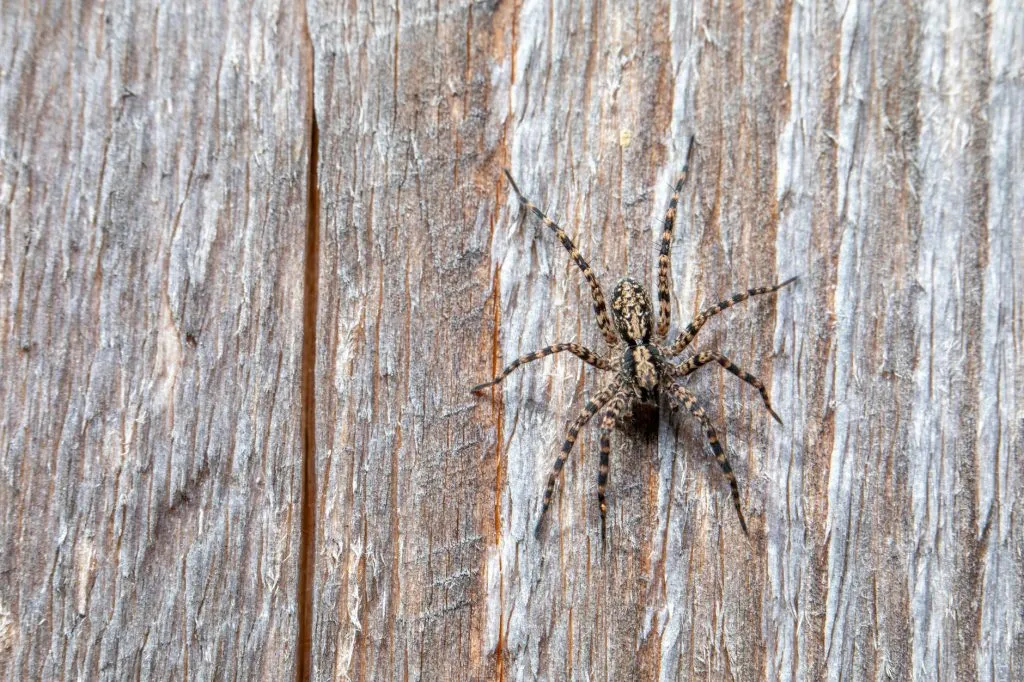
Spiders are common in basements because these spaces provide many of the conditions they prefer. Basements are usually darker, quieter, and more humid than the rest of the home. They also tend to attract insects, which gives spiders a reliable food source.
Most basement spiders are more of a nuisance than a serious threat. Still, repeated sightings, growing web activity, or large numbers of insects downstairs may point to conditions that are helping pests settle indoors.
Understanding why there are spiders in your basement can help you reduce the conditions attracting them and decide when professional pest control may make sense.
Key Takeaways About Basement Spiders
- Basements attract spiders because they provide shelter, moisture, and access to insects.
- Cellar spiders and common house spiders are some of the most common basement species.
- Cracks around foundations, windows, and utility lines often allow spiders and other pests indoors.
- Reducing insects, clutter, and moisture can help keep spiders from settling in basements.
Why Basements Attract Spiders
Basements naturally create an environment where spiders can hide and feed with little disturbance. Once insects begin gathering indoors, spiders often follow.
Dark and Quiet Basement Conditions
Spiders prefer areas where they can stay hidden during the day. Basements often provide low light, cooler temperatures, and storage areas that stay undisturbed for long periods.
Cellar spiders are especially common in these conditions. According to Mississippi State University Extension, cellar spiders commonly live in basements, crawl spaces, garages, and other dark locations around homes.
Insects That Attract Spiders Indoors
Spiders settle where they can find food. Flies, ants, moths, mosquitoes, and other bugs often gather in damp lower-level spaces, especially when moisture or clutter is present.
If insects continue appearing in your basement, spiders usually have a reason to stay nearby. A growing spider problem often points to a larger insect issue somewhere in the space.
Moisture and Humidity in Basements
Damp conditions can increase insect activity indoors, which indirectly attracts spiders. Condensation, plumbing leaks, poor ventilation, and humid basement air all contribute to conditions pests prefer.
Reducing excess moisture often helps lower both insect and spider activity over time.
Common Basement Spider Activity
Spider activity in basements usually becomes noticeable through webs, egg sacs, or repeated sightings around storage areas and corners.
Webs Around Basement Corners and Ceilings
Webs are often the first sign homeowners notice. Cellar spiders build loose, irregular webs in corners, ceiling joints, stairwells, and storage areas.
Common house spiders may build smaller webs around windows, shelving, or basement lighting where insects gather.
Egg Sacs Attached to Basement Surfaces
Some female spiders leave egg sacs attached to walls, boxes, wood, or stored belongings. If egg sacs continue appearing, spiders may be reproducing indoors rather than simply wandering through occasionally.
Removing webs and egg sacs helps reduce future spider activity before young spiders hatch and spread through the basement.
Repeated Spider Sightings in the Basement
Occasional sightings are fairly common in basements. However, repeated activity around the same corners, storage areas, or utility spaces usually means the environment is supporting insects and ongoing spider activity.
Basements with heavy clutter, moisture issues, or untreated cracks often experience more recurring pest problems.
How Spiders Get Into Basements
Most spiders enter through the same gaps and openings other pests use to get indoors. Once insects move inside, spiders often follow those same access routes.
Foundation Cracks and Basement Gaps
Cracks around foundations, basement windows, siding, vents, and utility openings are common entry points for spiders and other pests.
Sealing these gaps can help reduce how many insects and spiders enter the basement over time.
Storage Areas and Clutter Near Entry Points
Cardboard boxes, wood piles, stored materials, and cluttered basement corners create sheltered hiding areas close to entry points.
UC IPM notes that clutter, cracks, and sheltered areas around structures provide favorable conditions for spiders around homes.
Outdoor Pest Activity Near the Home
Spiders often settle around foundations, landscaping, rock piles, sheds, and outdoor storage before moving indoors. Outdoor lights can also attract insects, which then attract spiders near windows and basement entry areas.
The more insects gathering around the structure, the more likely spiders are to remain nearby.
Why Basement Spider Problems Sometimes Grow
Spider problems usually become worse when the conditions attracting them stay unchanged for long periods.
Ongoing Insect Problems Indoors
Spiders depend on insects for food. If flies, ants, mosquitoes, or other bugs continue appearing indoors, spiders often continue rebuilding webs nearby.
Reducing indoor insects is usually one of the most effective ways to get rid of recurring basement spiders.
Cluttered and Undisturbed Storage Areas
Storage rooms and unfinished basement spaces often stay untouched for weeks or months at a time. That gives spiders plenty of quiet areas to hide and build webs.
Reducing clutter and organizing storage spaces can help make the basement less attractive to both spiders and other pests.
Unsealed Cracks and Entry Areas
Small openings around windows, pipes, utility lines, and foundation edges allow pests to keep moving indoors.
If those entry points stay open, new spiders and insects may continue replacing the ones already removed.
How to Help Keep Spiders Out of Your Basement
Long-term spider prevention usually focuses on reducing insects, limiting moisture, and making the basement harder for pests to enter.
- Seal cracks around foundations, windows, vents, and utility openings.
- Reduce basement moisture with ventilation or dehumidifiers.
- Remove webs and egg sacs on a consistent basis.
- Limit clutter around storage areas and basement corners.
- Address flies, ants, and other bugs that attract spiders indoors.
- Store belongings in sealed plastic containers instead of cardboard boxes when possible.
Reducing Insects That Attract Spiders
Because spiders follow their food source, reducing insect activity indoors can make the basement less appealing overall.
Mississippi State University Extension explains that spiders usually build webs where prey insects are abundant.
Cleaning and Removing Spider Webs
Vacuuming webs, egg sacs, and insects helps disrupt the areas where spiders feed and settle. Regular cleaning also helps reduce dust, clutter, and food sources for other pests.
Peppermint oil and diatomaceous earth are sometimes used in DIY spider control efforts, but results are often inconsistent when underlying insect problems remain untreated.
Sealing Basement Entry Points
Repairing damaged screens, sealing cracks, and closing gaps around pipes and basement windows can help keep spiders and other pests from continuing to enter.
Even small openings can support recurring indoor pest movement if left untreated over time.
Professional Pest Control for Basement Spiders
When spider activity keeps returning, the problem often involves more than the spiders themselves. In many homes, insects, moisture, clutter, or hidden entry points continue supporting the infestation.
Kodiak Pest Control provides spider and general pest control services throughout Wyoming and Montana. Inspections focus on identifying insect activity, locating entry points, and helping homeowners reduce the conditions attracting spiders indoors.
Treatment plans may involve addressing other pests, reducing moisture issues, and targeting areas where cellar spiders, house spiders, sac spiders, or black widows may be settling indoors.
If spiders keep returning to your basement despite cleaning or DIY prevention efforts, you can schedule an inspection to identify contributing conditions and treatment options.
Bottom Line on Basement Spiders
Basements attract spiders because they provide shelter, moisture, and access to insects. While most basement spiders are nuisance pests, growing web activity or repeated sightings often point to conditions that are also supporting other indoor pests.
Reducing clutter, controlling moisture, sealing entry points, and lowering insect activity can all help keep spiders from settling indoors long term.
If spider activity continues increasing despite prevention efforts, a professional inspection can help identify what is attracting spiders to your basement in the first place.
Frequently Asked Questions About Basement Spiders
Why are there so many spiders in my basement?
Basements provide dark, quiet spaces with moisture and insects that spiders prefer. If insects continue gathering indoors, spiders often remain nearby because food is readily available.
Are basement spiders dangerous?
Most basement spiders are nuisance pests and rarely dangerous. However, some homes may occasionally encounter black widows or other species that require more caution.
What attracts spiders into basements?
Moisture, clutter, insects, cracks around foundations, and sheltered hiding spots all attract spiders into basements and lower-level storage spaces.
How do I get rid of basement spiders?
Reducing insects, sealing entry points, lowering moisture, cleaning webs, and removing clutter can all help reduce recurring spider activity indoors.
Our methodology: how we research pest control topics
Every Kodiak Pest Control article follows the same standard we hold our service work to: clear, accurate, and grounded in what actually works on a real Montana or Wyoming home. Homeowners across Billings and the Big Horn Basin count on us for honest pest information they can act on, and we treat the writing the same way.
We build our content from a combination of government guidance, peer-reviewed research, and the patterns our technicians see across homes in the regions we serve. Here is how we approach each article:
Studying pest behavior
We start with how each pest actually lives — where it nests, how it spreads, and what conditions support it. The high desert and basin climates of our service area shift pest pressure across the year, and understanding pest biology in this regional context is what keeps our recommendations practical.
Reviewing health and home risks
We review research on how each pest affects human health and home structures. Some pests are a nuisance. Others trigger allergies, carry bacteria, or cause structural damage. Knowing the actual risk helps homeowners decide how urgently to act.
Using Integrated Pest Management
Our recommendations are grounded in Integrated Pest Management (IPM), the framework supported by the USDA and EPA. IPM combines monitoring, sanitation, exclusion, and targeted treatment to reduce pest populations while limiting unnecessary product use.
Prioritizing prevention and lasting protection
A pest problem rarely ends with one treatment. We focus on the conditions that allow infestations to start in the first place — moisture, food sources, gaps around the home, harborage zones — because long-term control depends on changing the environment, not just treating the symptoms.
Citing peer-reviewed and government sources
Whenever possible, we support our recommendations with peer-reviewed studies, university extension research, and guidance from agencies like the EPA, CDC, and USDA. Each source we cite is listed at the end of the article.
Why trust us
Kodiak Pest Control is owner-operated by Jacob Haslem, serving homeowners across Billings, Laurel, Billings Heights, and Lockwood in Montana, and across Cowley, Lovell, Powell, Worland, and Greybull in Wyoming. We are a regional operation that knows the pests, the climate, and the homes in our service area.
That same standard runs through our content. The information you read here reflects what our technicians see in the field, what current research supports, and what we have learned from servicing homes across the Big Horn Basin and the Yellowstone County region.
Our credentials
- Owner-operated by Jacob Haslem
- Service across Billings, Laurel, Billings Heights, Lockwood (MT) and Cowley, Lovell, Powell, Worland, Greybull (WY)
- General pest control, specialty pest services, and seasonal treatments
- Trained pest control technicians on staff
- Continuous review of research, regulations, and regional pest pressure
Sources and standards we reference
To keep our content accurate and up to date, we rely on established research and authority sources, including:
Environmental Protection Agency (EPA):
Guidelines on product use, labeling, and approved applications.
Centers for Disease Control and Prevention (CDC):
Public-health guidance on pests that affect human health, including mosquitoes, ticks, rodents, and cockroaches.
United States Department of Agriculture (USDA):
Integrated Pest Management standards and pest biology research.
National Pest Management Association (NPMA):
Industry standards, pest behavior research, and seasonal trend reporting.
Montana State University Extension and University of Wyoming Extension:
Peer-reviewed, region-specific research on pest biology and control methods relevant to Montana and Wyoming homes.
Peer-reviewed journals:
Research published in entomology, public health, and environmental science journals to support specific claims about pest behavior, health risks, and treatment efficacy.
Article sources
The following sources were specifically referenced in the research and development of this article:
All information is accurate at the time of publication and is reviewed regularly to reflect current research and pest control standards.




